YOUR NEXT DISCOVERY/ArtifactsFollow your curiosity
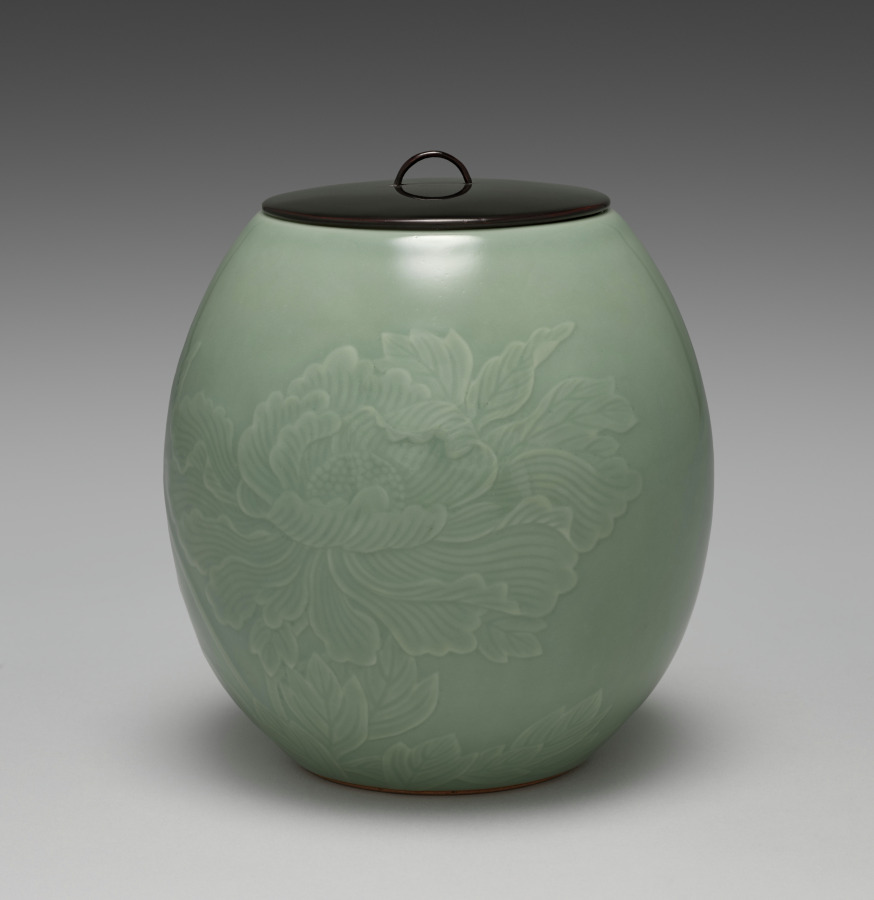
Water Container with Peonies, from The Cleveland Museum of Art
The Cleveland Museum of Art · Open Access · Reuse terms

Japan, Meiji period (1868–1912) / 1900–1914

Water Container with Peonies

Water Container with Peonies

The Cleveland Museum of Art catalogs Water Container with Peonies as ceramic (Japan, Meiji period (1868–1912) · 1900–1914).

This water container may also serve as a site for cultural reckoning, as when the life cycle of a flower prized in East Asia as a symbol of wealth is displayed across a Japanese chanoyu vessel whose glaze is associated with the seats of power in China and Korea.

SERENDIPITYA little unexpected
FamiliarWeird

The museum identifies this ceramic as Porcelain with molded and carved design, green glaze, and black lacquered lid and credits Seifū Yohei III (Japanese, 1851–1914).

The museum's collection notes: This ceramic is an especially accomplished example of Yohei III’s combination of an allover translucent colored glaze with molded and carved designs. It features the peony as its primary motif. The water container, or mizusashi , has a green glaze, and its design takes into consideration the rounded shape and the seated position of the host and guests. It begins low on the body with a flower just beginning to open and continues with another flower a bit higher up, with its petals fully extended and beginning to open outward. It finishes with a flower in full bloom, petals and leaves unfurled and spread outward from the center, now occupying a

The Cleveland Museum of ArtWater Container with Peonies

Original explanation based on the sources above. Images carry their own reuse terms.