YOUR NEXT DISCOVERY/ArtifactsFollow your curiosity
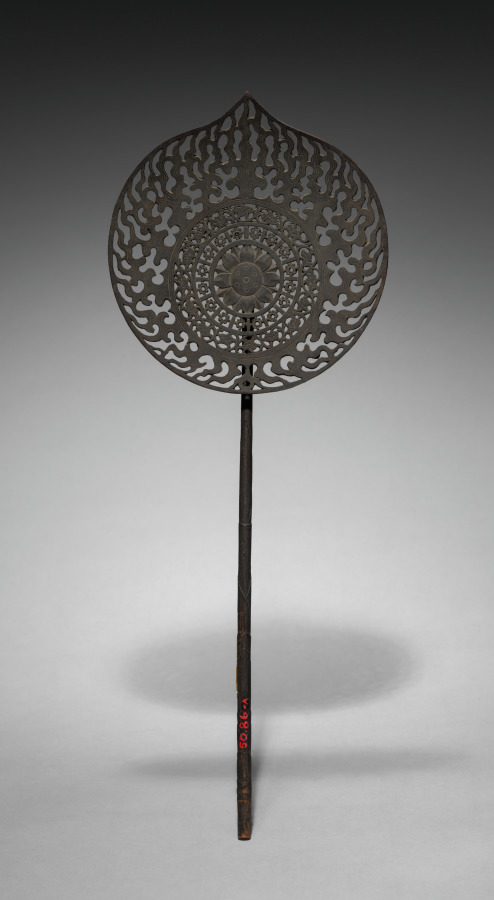
Halo for Buddha of the Future (Miroku Bosatsu), from The Cleveland Museum of Art
The Cleveland Museum of Art · Open Access · Reuse terms

Japan, Asuka period (538–710) / late 600s

Halo for Buddha of the Future (Miroku Bosatsu)

Halo for Buddha of the Future (Miroku Bosatsu)

The Cleveland Museum of Art catalogs Halo for Buddha of the Future (Miroku Bosatsu) as sculpture (Japan, Asuka period (538–710) · late 600s).

The Sanskrit name of this being, Maitreya, derives from the Sanskrit word for friend, mita .

SERENDIPITYA little unexpected
FamiliarWeird

The museum identifies this sculpture as cast bronze, incised, with traces of gilding.

The museum's collection notes: Buddhism was introduced to Japan in the sixth century. For early Japanese devotees, Buddhism offered the promise of salvation through faith in the Buddha of the Future, who would appear at the end of the world. The concept of eternal salvation held particular resonance with the Japanese aristocracy, who became the staunchest supporters of this new faith. Small sculptures like this one, with its gentle grace and powerful presence, were popular devotional objects.

The Cleveland Museum of ArtHalo for Buddha of the Future (Miroku Bosatsu)

Original explanation based on the sources above. Images carry their own reuse terms.