YOUR NEXT DISCOVERY/ArtifactsFollow your curiosity
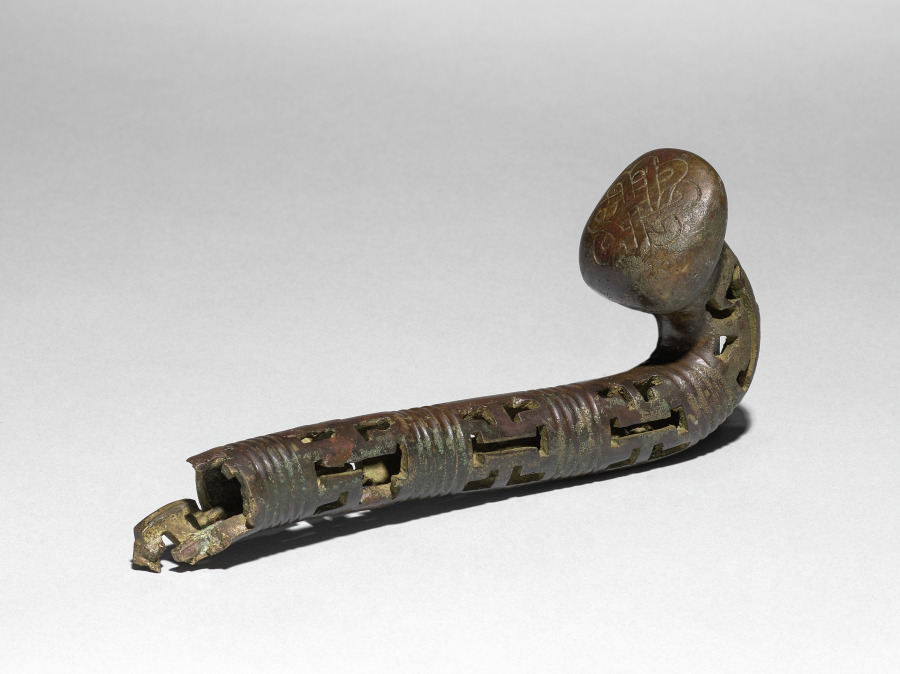
Tail for a Feline Incense Burner, from The Cleveland Museum of Art
The Cleveland Museum of Art · Open Access · Reuse terms

Iran, Khurasan, Seljuq period of Iran (1037–1194) / 1150–1200

Tail for a Feline Incense Burner

Tail for a Feline Incense Burner

The Cleveland Museum of Art catalogs Tail for a Feline Incense Burner as metalwork (Iran, Khurasan, Seljuq period of Iran (1037–1194) · 1150–1200).

The end of the tail is decorated with a guilloche pattern of interlacing curved lines.

SERENDIPITYA little unexpected
FamiliarWeird

The museum identifies this metalwork as Copper alloy, cast, engraved, chased, and pierced.

The museum's collection notes: In Iran during the 1000s and 1100s, vessels in the shape of animals gained popularity, especially as incense burners. Felines were favored in Persian art and this piece may represent a caracal, a type of lynx. The head of the creature was cast separately and is removable to fill its body with hot coals and incense. Qur’anic verses on the neck and spine remind worshippers to set work aside, attend prayer, and then disperse to seek God’s bounty. The diffusion of perfumed smoke through the burner’s pierced palmette design may have served as a sensorial reminder of this teaching.

The Cleveland Museum of ArtTail for a Feline Incense Burner

Original explanation based on the sources above. Images carry their own reuse terms.