YOUR NEXT DISCOVERY/ArtifactsFollow your curiosity
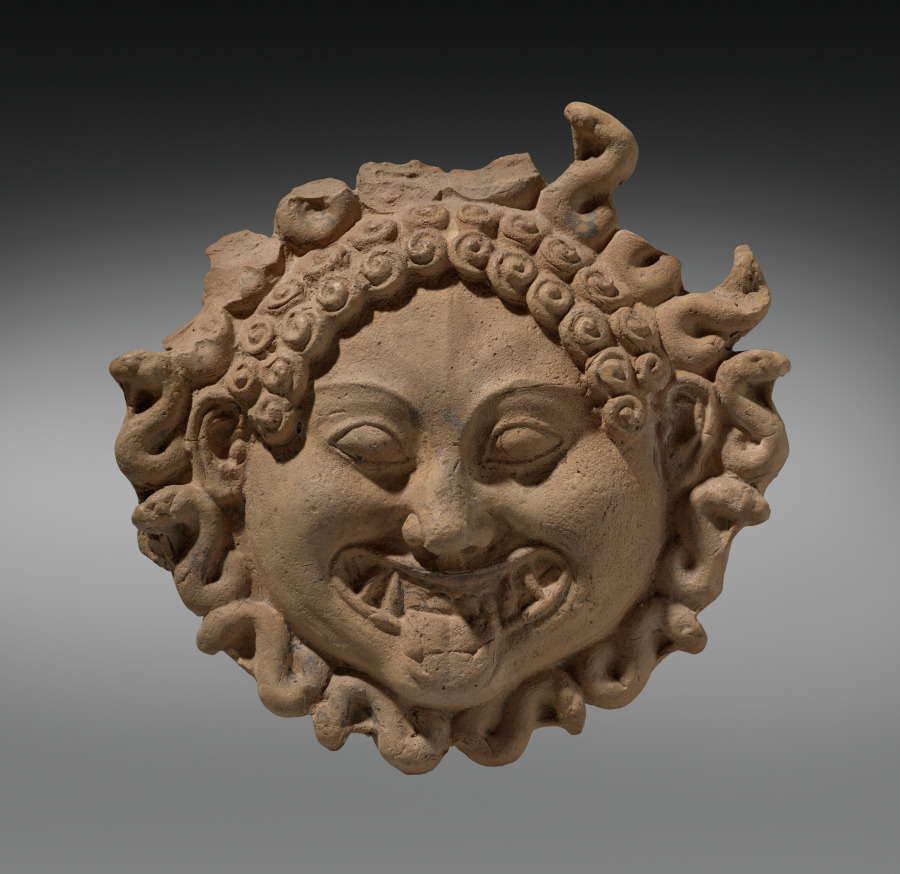
Gorgoneion Antefix (Ornamental Roof Tile), from The Cleveland Museum of Art
The Cleveland Museum of Art · Open Access · Reuse terms

Greek / South Italian, Taranto / c. 500 BCE

Gorgoneion Antefix (Ornamental Roof Tile)

Gorgoneion Antefix (Ornamental Roof Tile)

The Cleveland Museum of Art catalogs Gorgoneion Antefix (Ornamental Roof Tile) as ceramic (Greek / South Italian, Taranto · c. 500 BCE).

The Gorgoneion represents the decapitated head of Medusa, most famous of the three Gorgon sisters.

SERENDIPITYA little unexpected
FamiliarWeird

The museum identifies this ceramic as Terracotta (moldmade).

The museum's collection notes: This mold-made terracotta antefix, a type of ornamental roof tile, takes the form of a Gorgoneion, a disembodied Gorgon head. Nearly circular in shape, it features bulging, almond-shaped eyes and a grinning mouth with wide tongue and sharp teeth or tusks. S-shaped serpents surround the head, some standing tall. Traces of pigment suggest a more vivid original appearance, perhaps considered both terrifying and protective.

The Cleveland Museum of ArtGorgoneion Antefix (Ornamental Roof Tile)

Original explanation based on the sources above. Images carry their own reuse terms.