YOUR NEXT DISCOVERY/ArtifactsFollow your curiosity
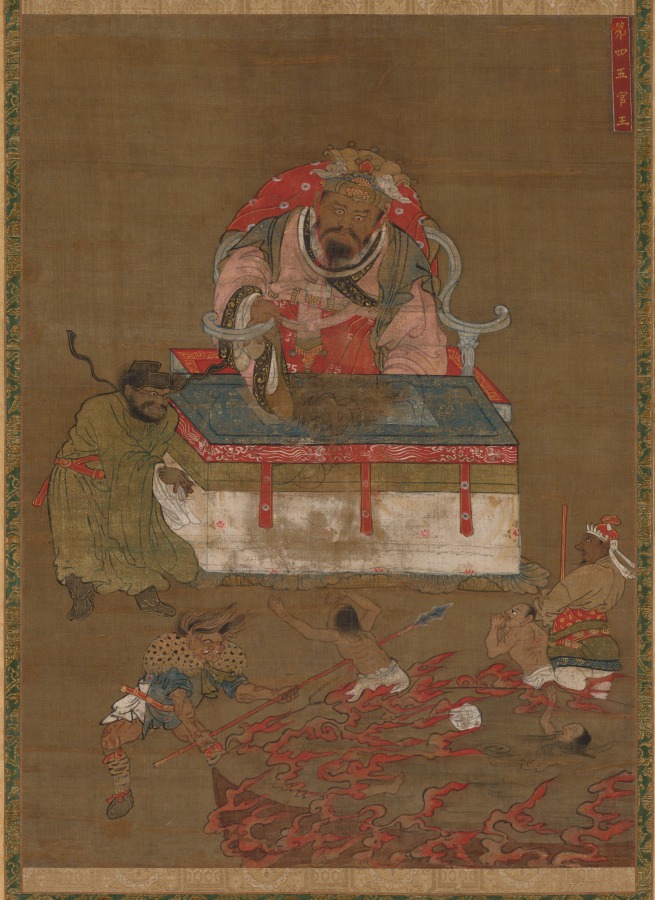
The Fourth King of Hell, from The Cleveland Museum of Art
The Cleveland Museum of Art · Open Access · Reuse terms

Korea, Goryeo dynasty (918–1392) / late 1300s

The Fourth King of Hell

The Fourth King of Hell

The Cleveland Museum of Art catalogs The Fourth King of Hell as painting (Korea, Goryeo dynasty (918–1392) · late 1300s).

As the concept of salvation became increasingly more emphasized in Buddhist schools in medieval East Asia, the gruesome depiction of various hells was given an important role: to promote Buddhist ethics. In the Buddhist infernal otherworld, the Ten Kings of Hell serve as judges of the deceased to determine their fates, including the type and severity of punishment.

SERENDIPITYA little unexpected
FamiliarWeird

The museum identifies this painting as Hanging scroll; ink, color, and gold ink on silk.

The museum's collection notes: Originally part of a set of ten, this hanging scroll depicts the Fourth King of Hell. Accompanied by his secretary, the king with bulging eyes is seated at the center, overseeing how well his verdict is being conducted. On the bottom, sinners are suffering in a giant cauldron filled with boiling water, constantly pierced by a guard’s burning spears. Ready-made Buddhist paintings from China, created in professional workshops in the port city of Ningbo, are believed to one of the important inspirations for this hell scene.

The Cleveland Museum of ArtThe Fourth King of Hell

Original explanation based on the sources above. Images carry their own reuse terms.