YOUR NEXT DISCOVERY/ArtifactsFollow your curiosity
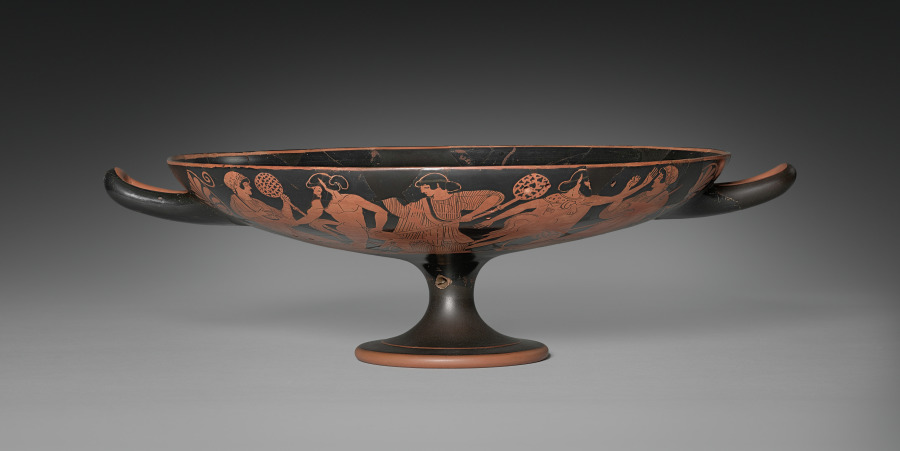
Red-Figure Kylix (Drinking Cup): Dionysos and Satyr (I); Satyrs and Maenads (A, B), from The Cleveland Museum of Art
The Cleveland Museum of Art · Open Access · Reuse terms

Greece, Athens / c. 480 BCE

Red-Figure Kylix (Drinking Cup): Dionysos and Satyr (I); Satyrs and Maenads (A, B)

Red-Figure Kylix (Drinking Cup): Dionysos and Satyr (I); Satyrs and Maenads (A, B)

The Cleveland Museum of Art catalogs Red-Figure Kylix (Drinking Cup): Dionysos and Satyr (I); Satyrs and Maenads (A, B) as ceramic (Greece, Athens · c. 480 BCE).

In the tondo, a dancing satyr approaches the wine god Dionysos, who holds a kantharos and grapevine.

SERENDIPITYA little unexpected
FamiliarWeird

The museum identifies this ceramic as ceramic and credits Douris (Greek, Attic, active c. 500–470 BCE).

The museum's collection notes: Reconstructed from 72 fragments, this cup has been repaired several times, indicating its enduring value to owners. Pairs of holes straddling cracks once held ancient wire or clamp repairs. Numerous incomplete holes may signify recent interventions. Early modern efforts to hide cracks and certain features of the satyrs that could have offended sensibilities of the time also masked the original artistry of its painting. So, for many years the cup languished in storage. Cleaning and reconstruction in 1952–53 revealed enough to allow attribution to a respected vase painter, Douris, reviving the cup’s reputation. More recently, a different attrib

The Cleveland Museum of ArtRed-Figure Kylix (Drinking Cup): Dionysos and Satyr (I); Satyrs and Maenads (A, B)

Original explanation based on the sources above. Images carry their own reuse terms.