A CLOSER LOOK
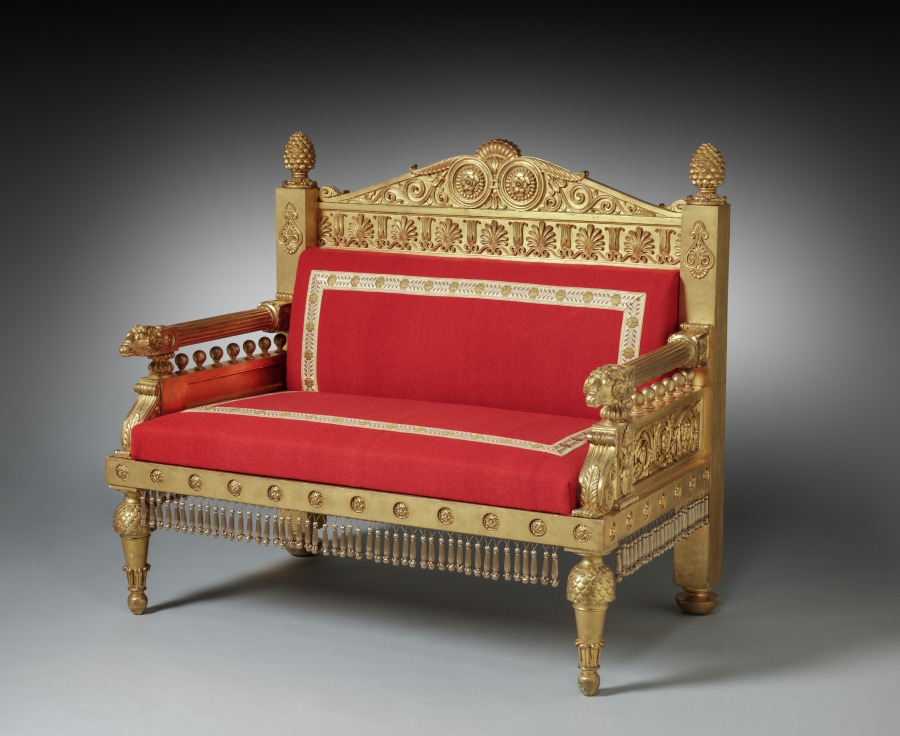
The museum identifies this wood as gilt-wood, reproduction wool upholstery and credits Thomas Hope (British, 1769–1831).
The museum's collection notes: An art collector, designer, and champion of neoclassicism, Thomas Hope designed this settee for display in his London house. Hope’s design exemplifies the continued interest in neoclassical ornament around 1800 through the use of elaborately carved friezes, a central pediment, and a lavishly gilded surface. In 1807 Hope published Household Furniture and Interior Decoration , featuring descriptions of his renowned collection of antiquities and the interior furnishings from his London house, including this settee. Many architects and cabinetmaking firms took inspiration from Hope’s designs, adapting Greek and Roman forms to create bold expressi