A CLOSER LOOK
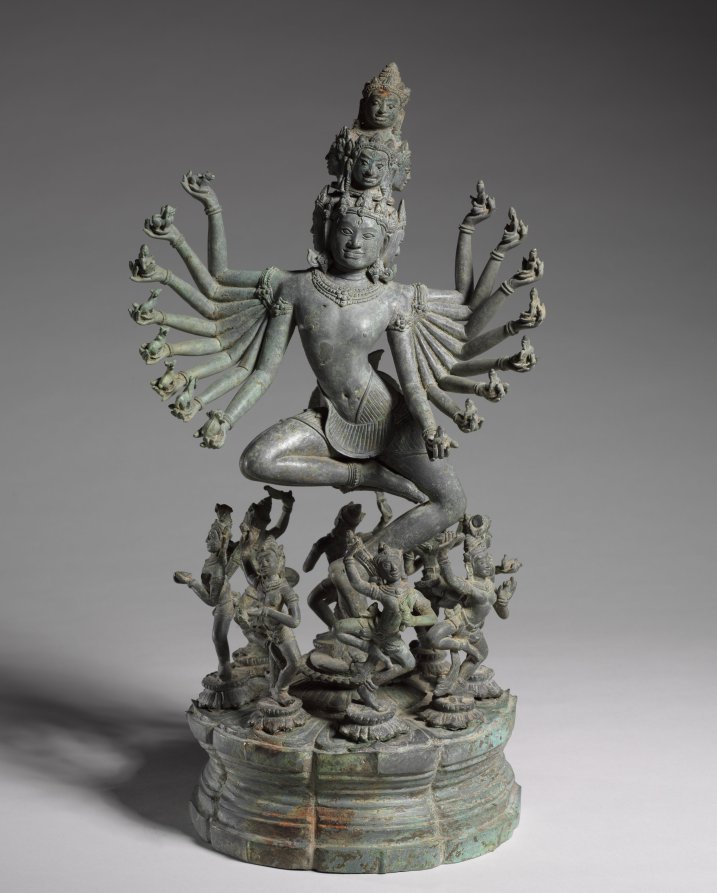
The museum identifies this sculpture as Bronze.
The museum's collection notes: Hevajra was an important figure signaling the practice of Buddhist rituals. King Jayavarman VII placed particular emphasis on Hevajra during consecration rituals and set up a colossal stone sculpture of dancing Hevajra at the east gate of his fortified city in the Khmer capital at Angkor. In the Cambodia of Jayavarman VII, tantric Buddhism became public and widespread, practiced together with other more mainstream forms of Buddhism, Hinduism, and ancestor worship. The iconography of Hevajra is described in detail in a text that bears his name, the Hevajra-tantra , first composed in India probably in the 800s. Hevajra has eight heads, sixteen