A CLOSER LOOK
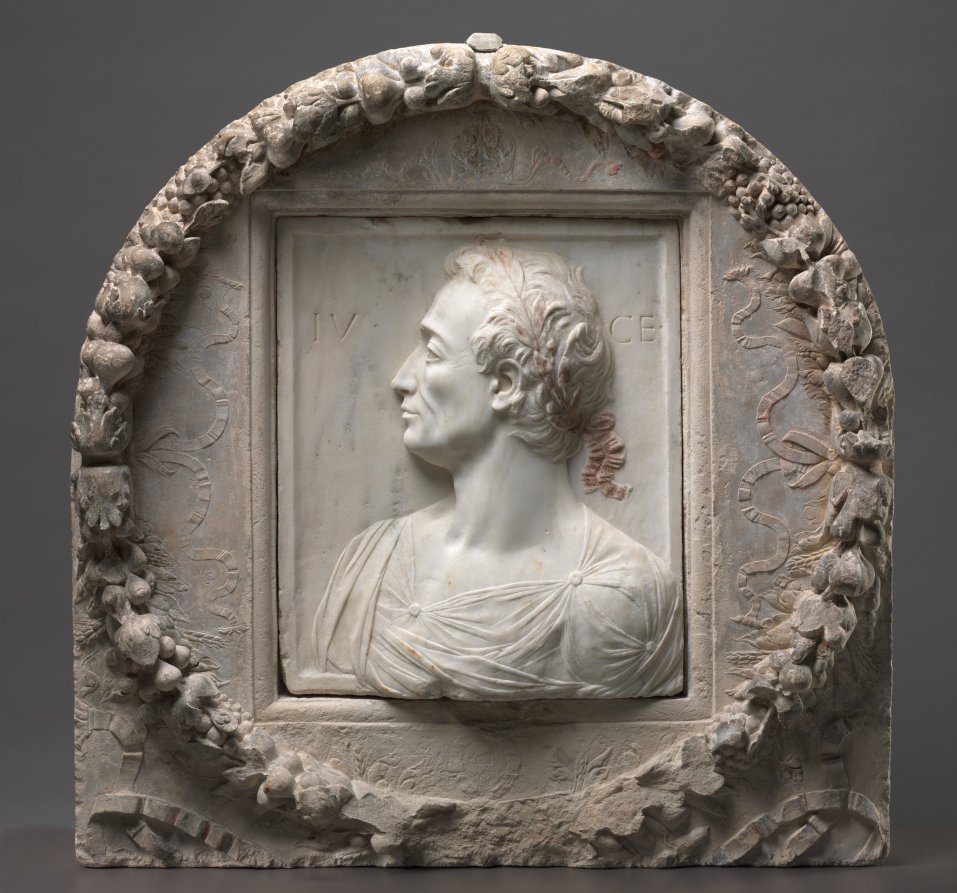
The museum identifies this sculpture as marble with traces of bole (red clay) and limestone with traces of paint and credits Mino da Fiesole (Italian, c. 1430–1484).
The museum's collection notes: Renowned Roman general and statesman Julius Caesar (100–44 BCE) appears here as a political rather than military leader, worn by the burdens of office, with carefully described signs of aging. Mino probably used ancient coins from the collection of the Medici, Florence's ruling family, as his starting point for this sculpture. However, the complex carving, the clinging drapery, and the psychological intensity all characterize the inventiveness Renaissance artists brought to classical subject matter. In this case, Caesar offered an important model for leadership, masculinity, and composure. The garland is clearly by a different hand, but passa