A CLOSER LOOK
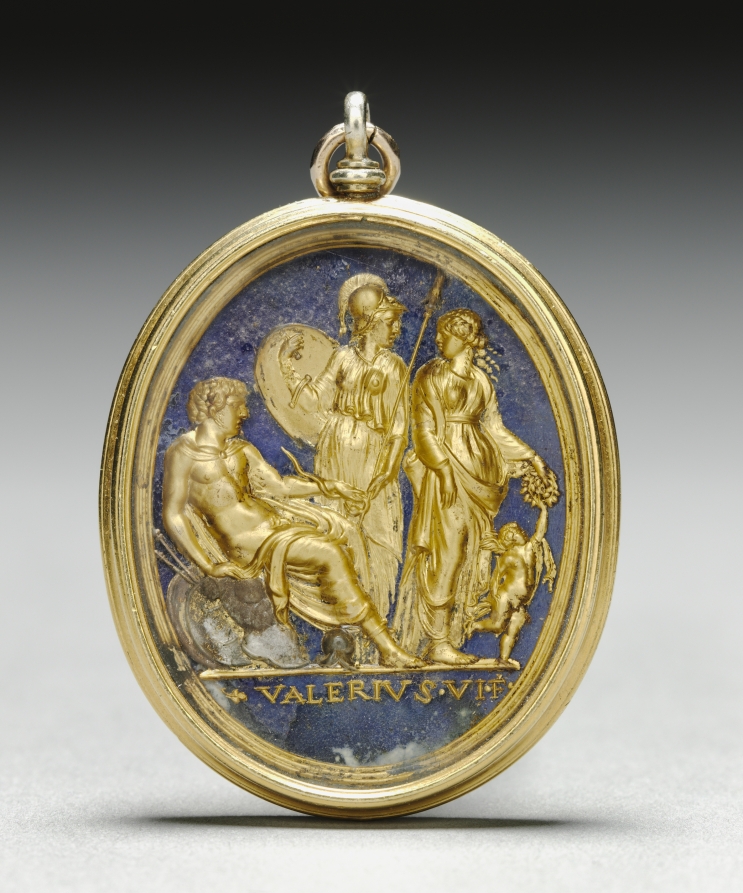
The museum identifies this sculpture as rock crystal intaglio, gilded from reverse with gold and silver, backed with lapis lazuli, mounted in a gold pendant and credits Valerio Belli (Italian, c. 1468–1546).
The museum's collection notes: Mars, the god of war, chooses Minerva over Venus, goddesses representing Virtue and Vice. The subject was common in antiquity, although the male figure traditionally represents Hercules. The snake passing from Minerva to Mars lionizes wisdom, perhaps indicating that the patron, who has yet to be identified, connected the idea of a difficult choice to a specific military or political problem.