YOUR NEXT DISCOVERY/ArtifactsFollow your curiosity
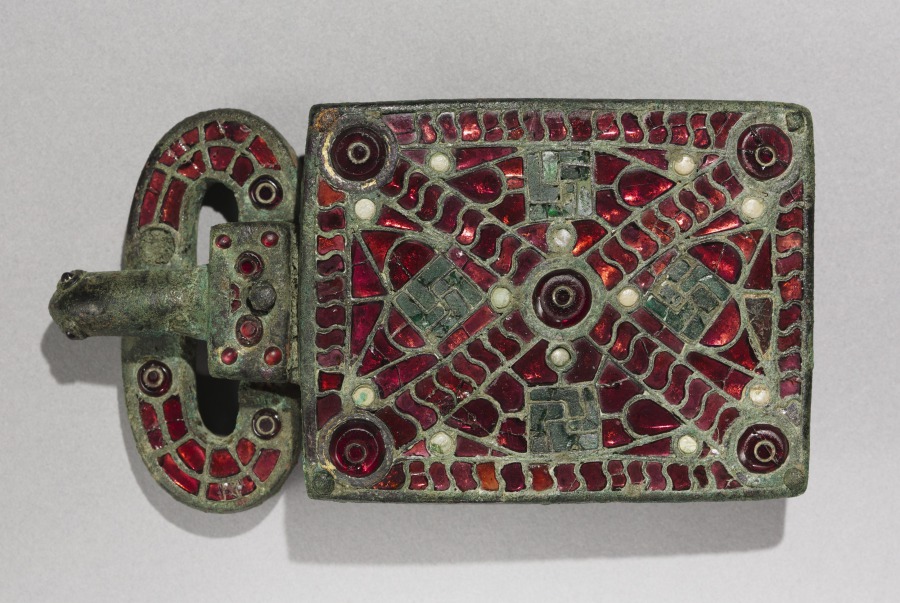
Belt Buckle, from The Cleveland Museum of Art
The Cleveland Museum of Art · Open Access · Reuse terms

Visigothic, Spain, Migration Period, 6th century / c. 525–560

Belt Buckle

Belt Buckle

The Cleveland Museum of Art catalogs Belt Buckle as jewelry (Visigothic, Spain, Migration Period, 6th century · c. 525–560).

The art of the European Migration Period (3rd-7th centuries AD) is almost exclusively one of personal adornment-a portable art that followed men and women to their graves. Belt buckles with large rectangular attachment plates have been discovered in cemeteries across the Iberian Peninsula-now occupied by Spain and Port

SERENDIPITYA little unexpected
FamiliarWeird

The museum identifies this jewelry as bronze with garnets, glass, mother of pearl, gold foil, traces of gilding; bronze and glass.

The museum's collection notes: The art of the European Migration Period (3rd-7th centuries AD) is almost exclusively one of personal adornment-a portable art that followed men and women to their graves. Belt buckles with large rectangular attachment plates have been discovered in cemeteries across the Iberian Peninsula-now occupied by Spain and Portugal-from the period of Visigothic occupation (about AD 412-711). Their decoration varies. Finer examples, like this one, are distinguished by brilliantly inlaid semi-precious stones and colored glass. Garnets were especially prized in Visigothic society for use in cloisonné jewelry. The technique involved the fitting of careful

The Cleveland Museum of ArtBelt Buckle

Original explanation based on the sources above. Images carry their own reuse terms.