A CLOSER LOOK
The museum identifies this sculpture as bronze (solid cast).
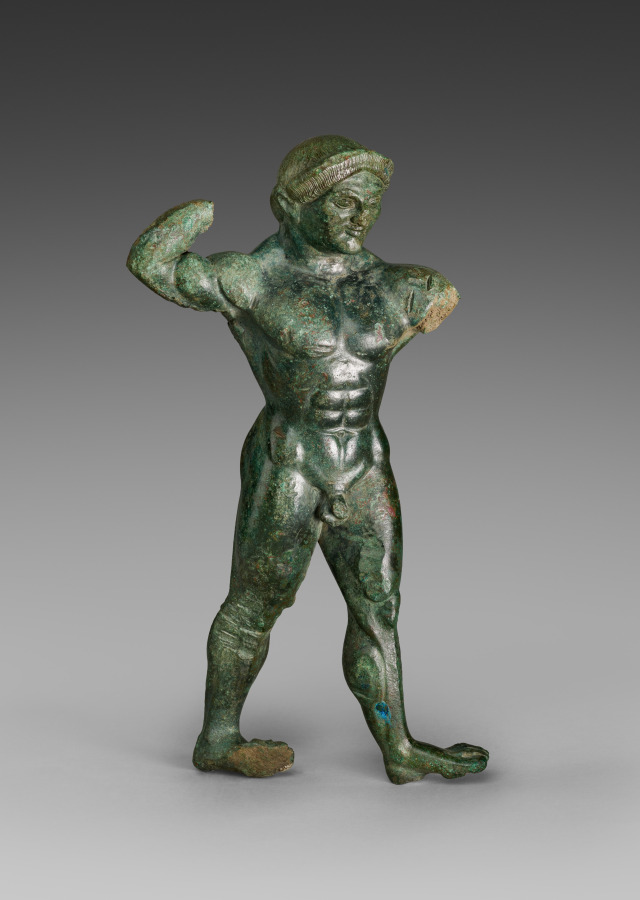
The museum's collection notes: Striding forward with his left foot, this nude figure turns his torso and raises his tightly bent right arm behind his head. Despite significant damage, the statuette conveys a naturalistic sense of form and movement rarely seen in early Greek art. Its most striking feature is its powerful physique, with sharply defined, bulging muscles. Formerly called an athlete and assumed to have held a javelin or discus, the figure likely depicts the hero Herakles, revered for his strength and often shown in this smiting pose, wielding a club. Though usually bearded in this period, this representation emphasizes his youthfulness, with an idealized face a