YOUR NEXT DISCOVERY/ArtifactsFollow your curiosity
Tomb Guardians, from The Cleveland Museum of Art
The Cleveland Museum of Art · Open Access · Reuse terms

China, probably Shaanxi province, Xi'an, Tang dynasty (618-907) / early 700s

Tomb Guardians

Tomb Guardians

The Cleveland Museum of Art catalogs Tomb Guardians as ceramic (China, probably Shaanxi province, Xi'an, Tang dynasty (618-907) · early 700s).

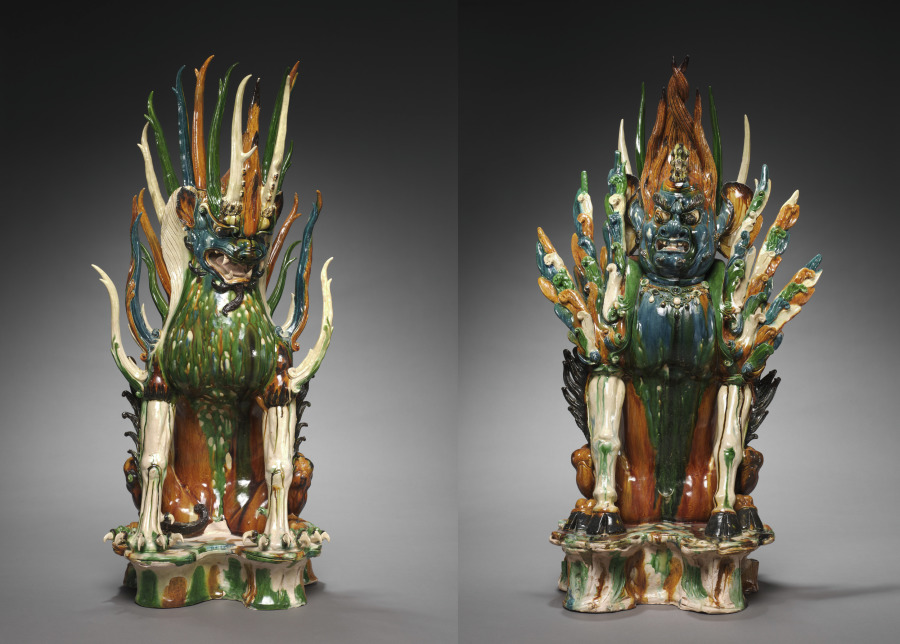
Sancai (three-color) glazes in green, amber, and transparent white, plus expensive cobalt blue glaze, show the high social status of the tomb’s occupant.

SERENDIPITYA little unexpected
FamiliarWeird

The museum identifies this ceramic as glazed earthenware, sancai (three-color) ware.

The museum's collection notes: With fierce expressions, elongated spikes, and exaggerated physical features, these two fantastic creatures were intended to guard the entrance to a tomb, warding off evil as well as keeping the soul of the deceased from wandering. Known as qitou , or earth spirits, both sculptures differ in appearance: one has an animal face, claws, and a pair of antlers; the other sports a human face with huge ears, hooves, and a short horn.

The Cleveland Museum of ArtTomb Guardians

Original explanation based on the sources above. Images carry their own reuse terms.