A CLOSER LOOK
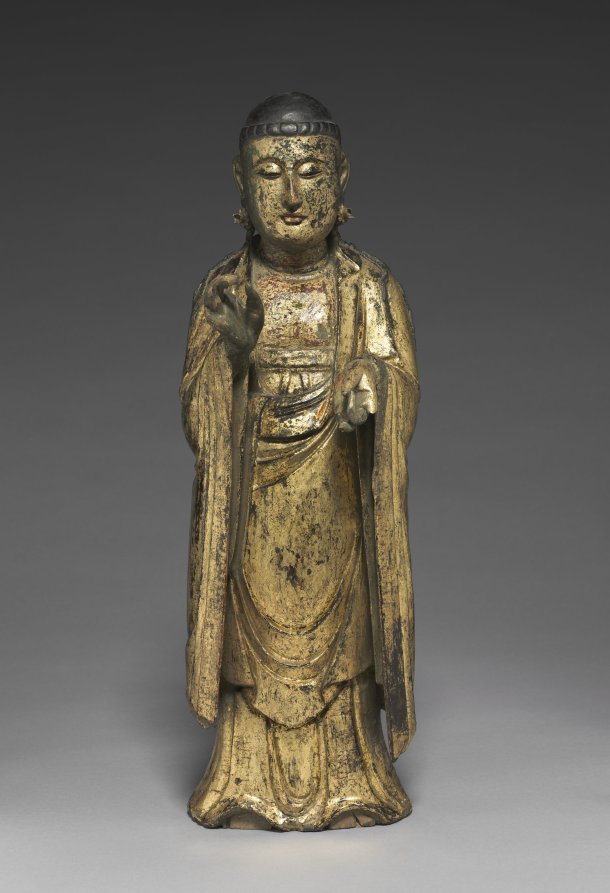
The museum identifies this sculpture as wood with lacquer and gold, and metal earrings.
The museum's collection notes: This work demonstrates the enduring presence of Buddhism and its religious practice during the Joseon dynasty (1392–1910) even after Neo-Confucianism, a revised form of Confucianism that emphasized self-cultivation as a path to the formation of a harmonious society and state, became the state religion. Because of its missing crown, it is hard to identify what Buddhist deity this statue represents. But there is no doubt it still can be attributed to a bodhisattva (meaning “enlightened being”) for its iconographic attributes: elaborate jewelry and a lock of long hair.