A CLOSER LOOK
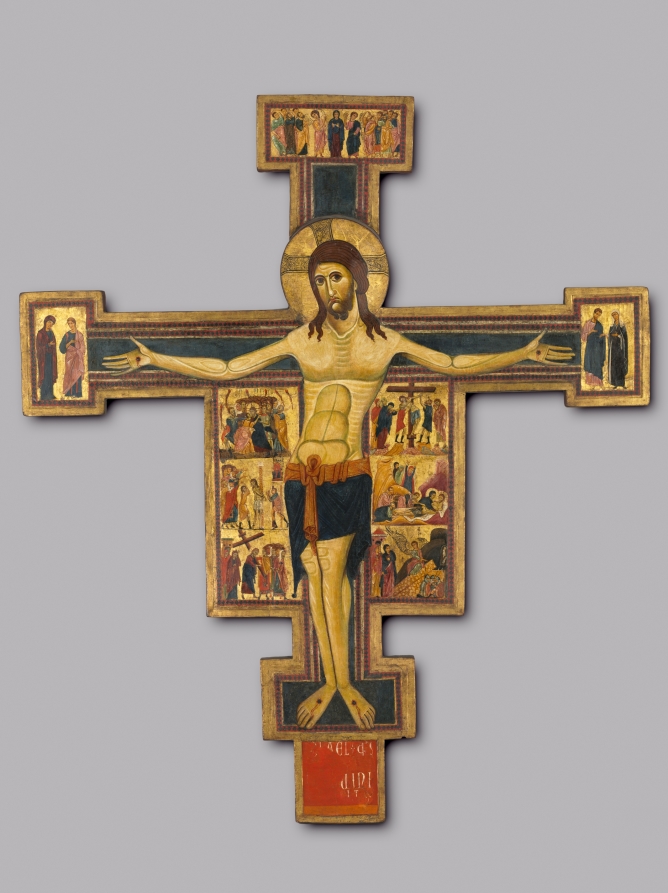
The museum identifies this painting as tempera with gold on panel.
The museum's collection notes: Large painted crucifixes dating from the 1100s and 1200s are among the earliest surviving Italian panel paintings. Large crosses, like this beautiful example, were typically suspended high above an altar in the main apse of Italian churches. Smaller crosses were placed on or just above altars in small side chapels. Such crosses served as the visual focus for devotion and symbolized the Eucharistic sacrament performed by the priest on the altar below. This crucifix shows Christ alive on the cross as the triumphant savior of mankind. Smaller images on the "apron" represent images of Christ's Passion (to the left) and his death and Resurrection