YOUR NEXT DISCOVERY/ArtifactsFollow your curiosity
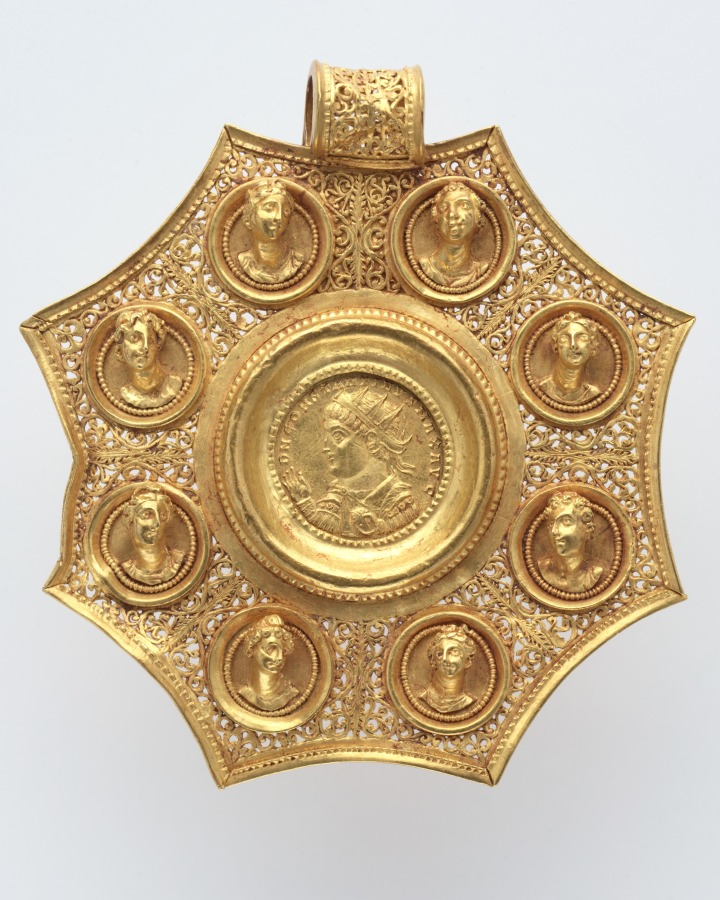
Octagonal Pendant, from The Cleveland Museum of Art
The Cleveland Museum of Art · Open Access · Reuse terms

Byzantium, Late Roman, Eastern Mediterranean, (probably Sirium or Nicomedia), Byzantine period / 324–26 CE

Octagonal Pendant

Octagonal Pendant

The Cleveland Museum of Art catalogs Octagonal Pendant as jewelry (Byzantium, Late Roman, Eastern Mediterranean, (probably Sirium or Nicomedia), Byzantine period · 324–26 CE).

Precious Byzantine coins, such as the one in this pendant, were mounted as jewelry and bestowed upon court officials as a special honor. They signified loyalty to the emperor and were often passed down as family heirlooms. Does your family have special objects that have been preserved from generation to generation?

SERENDIPITYA little unexpected
FamiliarWeird

The museum identifies this jewelry as gold.

The museum's collection notes: Mounted at the center of this octagonal pendant is a rare coin issued by Constantine the Great, the Roman Empire’s first Christian emperor. Constantine’s portrait appears on the coin’s front, those of two of his sons on the back. Constantine’s image is surrounded by male and female busts, some of which are mythological figures. The pendant once formed the centerpiece of a sumptuous gold necklace, likely a gift for a high-ranking court official or member of the imperial family.

The Cleveland Museum of ArtOctagonal Pendant

Original explanation based on the sources above. Images carry their own reuse terms.