YOUR NEXT DISCOVERY/ArtifactsFollow your curiosity
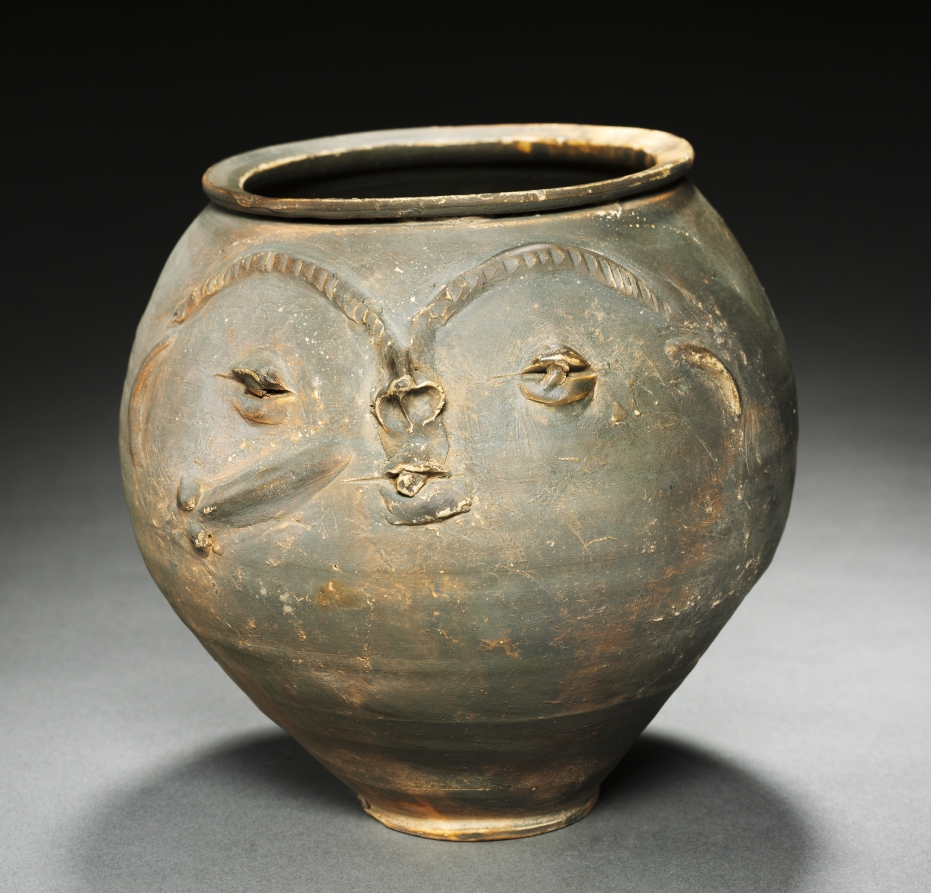
Face Urn, from The Cleveland Museum of Art
The Cleveland Museum of Art · Open Access · Reuse terms

Rhenish (Cologne), Gallo Roman, 2nd quarter, 1st Century / 25–50 CE

Face Urn

Face Urn

The Cleveland Museum of Art catalogs Face Urn as ceramic (Rhenish (Cologne), Gallo Roman, 2nd quarter, 1st Century · 25–50 CE).

The phallus was often used as a protective symbol in the ancient world.

SERENDIPITYA little unexpected
FamiliarWeird

The museum identifies this ceramic as reddish ware with gray burnished slip.

The museum's collection notes: This wheel-thrown vase is decorated with humanlike facial features and a phallus applied to the face’s cheek. Wide arching eyebrows meet at the short bridge of the face’s puggy nose, which sits over lips pursed around its protruding tongue. Finger marks can be seen around the eyes and eyebrows where clay was added onto the surface of the vessel to form the facial features.

The Cleveland Museum of ArtFace Urn

Original explanation based on the sources above. Images carry their own reuse terms.