YOUR NEXT DISCOVERY/ArtifactsFollow your curiosity
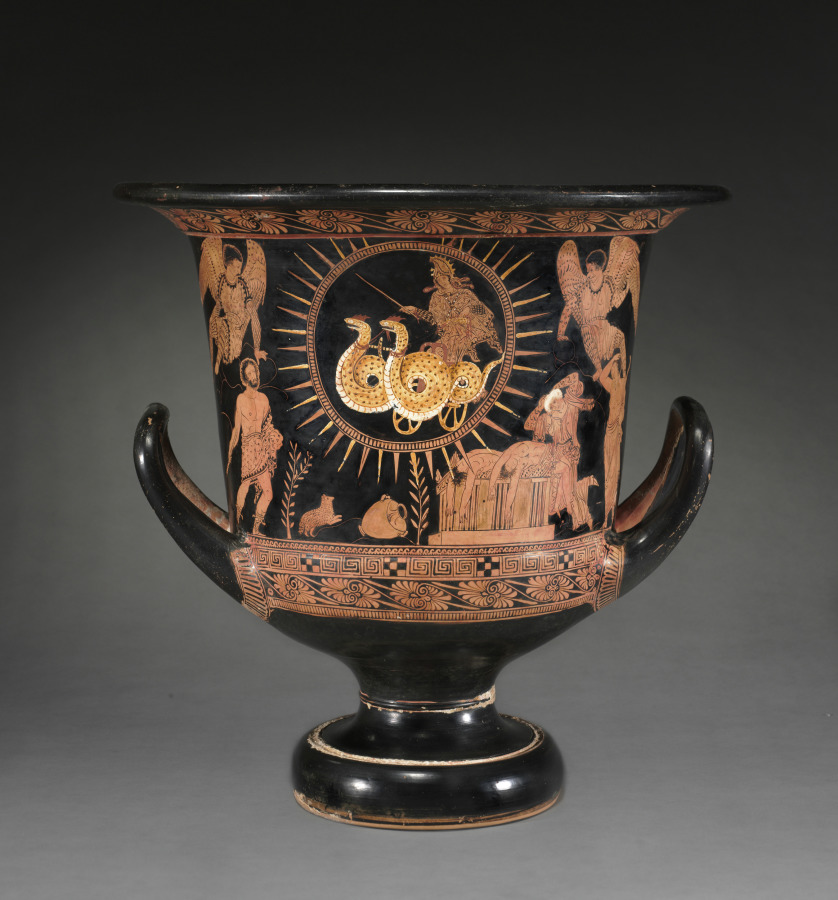
Red-Figure Calyx-Krater (Mixing Vessel): Medea in Chariot (A); Telephos with Baby Orestes (B), from The Cleveland Museum of Art
The Cleveland Museum of Art · Open Access · Reuse terms

South Italian, Lucanian / c. 400 BCE

Red-Figure Calyx-Krater (Mixing Vessel): Medea in Chariot (A); Telephos with Baby Orestes (B)

Red-Figure Calyx-Krater (Mixing Vessel): Medea in Chariot (A); Telephos with Baby Orestes (B)

The Cleveland Museum of Art catalogs Red-Figure Calyx-Krater (Mixing Vessel): Medea in Chariot (A); Telephos with Baby Orestes (B) as ceramic (South Italian, Lucanian · c. 400 BCE).

This vase includes scenes connected to two Athenian tragedies dealing with children— Medea and Telephos .

SERENDIPITYA little unexpected
FamiliarWeird

The museum identifies this ceramic as ceramic and credits Policoro Painter (South Italian, Lucanian, active c. 400 BCE).

The museum's collection notes: The remarkable scene on the front of this vase relates to the famous tragedy Medea , written by Euripides and first produced in Athens in 431 BC. Framed in the center by a halo (recalling her sun god grandfather Helios), the sorceress Medea flies off in a dragon-drawn chariot. Seeking revenge against her husband Jason, leader of the Argonauts, Medea has just slain their two children. Two Furies flank her, while Jason and a distraught nurse and teacher approach the bodies on the altar below. A different tragedy unfolds on the other side of the vase, from Euripides’s Telephos (438 BC). The wounded warrior Telephos holds the baby Orestes hostage

The Cleveland Museum of ArtRed-Figure Calyx-Krater (Mixing Vessel): Medea in Chariot (A); Telephos with Baby Orestes (B)

Original explanation based on the sources above. Images carry their own reuse terms.