YOUR NEXT DISCOVERY/ArtifactsFollow your curiosity
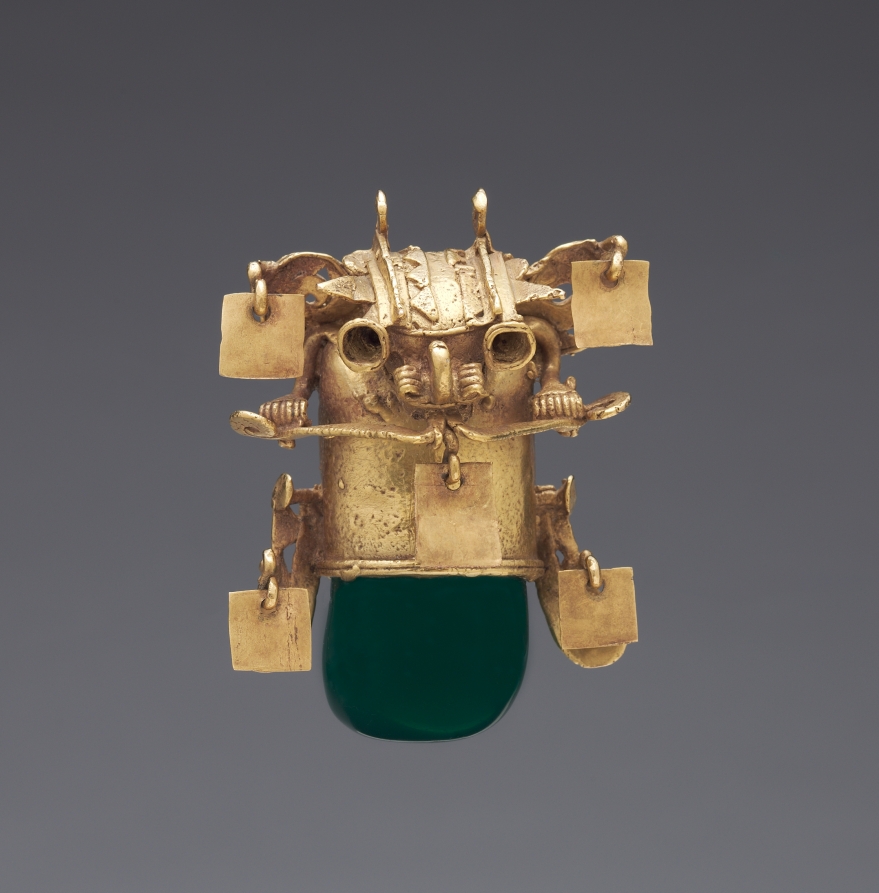
Crocodile Pendant, from The Cleveland Museum of Art
The Cleveland Museum of Art · Open Access · Reuse terms

Panama, Azuero Peninsula, Parita style, 11th-16th century / 1000–1550

Crocodile Pendant

Crocodile Pendant

The Cleveland Museum of Art catalogs Crocodile Pendant as metalwork (Panama, Azuero Peninsula, Parita style, 11th-16th century · 1000–1550).

The greenstone replaced a piece of carved whale bone that was once improperly paired with the pendant.

SERENDIPITYA little unexpected
FamiliarWeird

The museum identifies this metalwork as cast gold, modern greenstone.

The museum's collection notes: Of great importance in ancient Panama were beings that combined crocodile features, especially the mouth, with lizard traits, such as the iguana’s head crest. This example also has a back-swept nose, perhaps that of the leaf-nosed bat. The greenstone is a modern replacement for a stone or shell that once completed the crocodile’s body.

The Cleveland Museum of ArtCrocodile Pendant

Original explanation based on the sources above. Images carry their own reuse terms.