YOUR NEXT DISCOVERY/ArtifactsFollow your curiosity
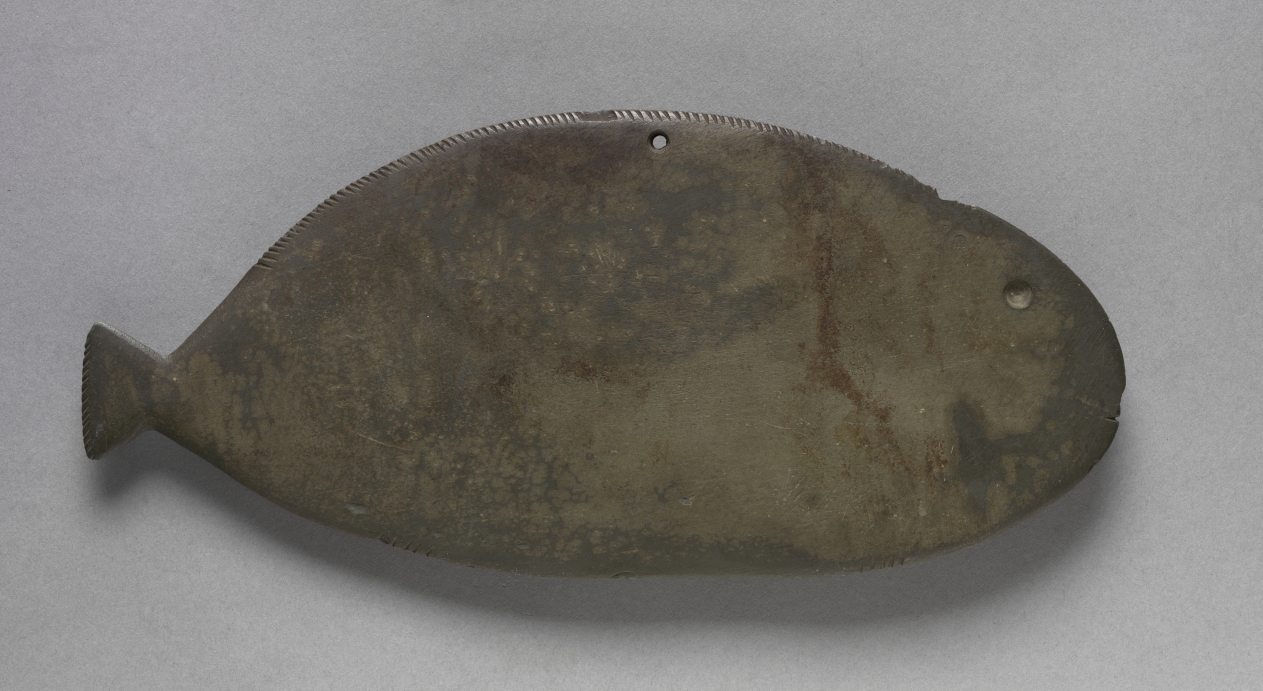
Palette in the Form of a Fish, from The Cleveland Museum of Art
The Cleveland Museum of Art · Open Access · Reuse terms

Egypt, Predynastic (5000–2950 BCE), Naqada II–III (3650–3000 BCE) / c. 3500–2950 BCE

Palette in the Form of a Fish

Palette in the Form of a Fish

The Cleveland Museum of Art catalogs Palette in the Form of a Fish as tools and equipment (Egypt, Predynastic (5000–2950 BCE), Naqada II–III (3650–3000 BCE) · c. 3500–2950 BCE).

This fish shape is one of the most common for Egyptian cosmetic palettes.

SERENDIPITYA little unexpected
FamiliarWeird

The museum identifies this tools and equipment as graywacke.

The museum's collection notes: Stone palettes were used for grinding eye paint worn for cosmetic purposes and to protect against sun glare and eye infections. There were two types: green, made from malachite (copper ore), and black, made from galena (lead ore). As funerary items, these ores may have had a deep significance for the deceased as symbols of regeneration and rebirth: the rich soil of the banks of the Nile (black), and the lush vegetation it sustained (green).

The Cleveland Museum of ArtPalette in the Form of a Fish

Original explanation based on the sources above. Images carry their own reuse terms.