YOUR NEXT DISCOVERY/ArtifactsFollow your curiosity
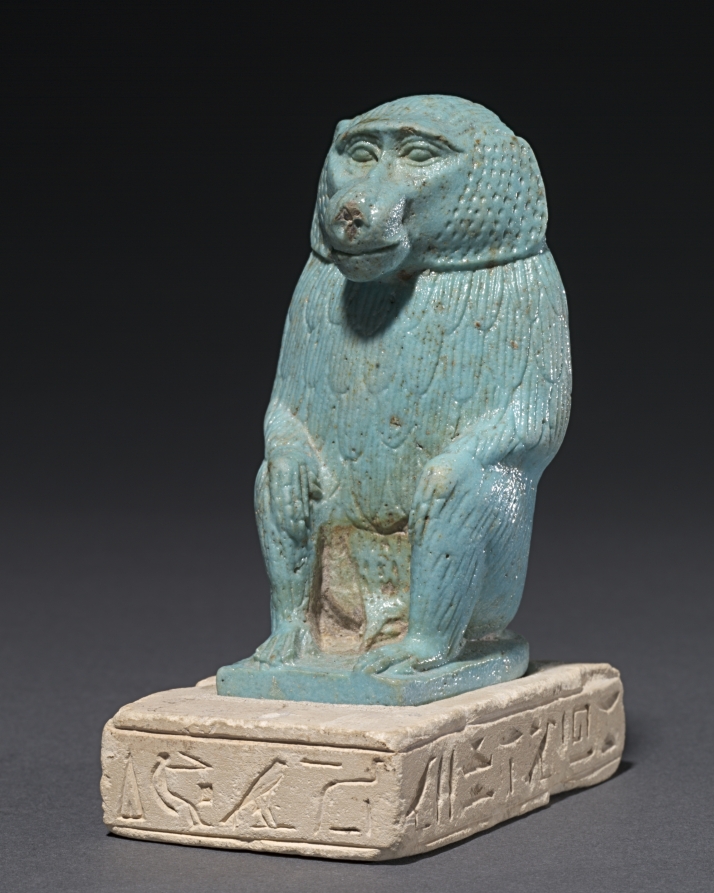
Baboon on a Limestone Base, from The Cleveland Museum of Art
The Cleveland Museum of Art · Open Access · Reuse terms

Egypt, Late period (715–332 BCE), Dynasty 30–Greco-Roman period (332 BCE–395 CE), Ptolemaic dynasty / 380–30 BCE

Baboon on a Limestone Base

Baboon on a Limestone Base

The Cleveland Museum of Art catalogs Baboon on a Limestone Base as sculpture (Egypt, Late period (715–332 BCE), Dynasty 30–Greco-Roman period (332 BCE–395 CE), Ptolemaic dynasty · 380–30 BCE).

The statuette is made from Egyptian faience and is glazed with a pale, semigloss turquoise.

SERENDIPITYA little unexpected
FamiliarWeird

The museum identifies this sculpture as pale turquoise faience.

The museum's collection notes: This finely carved Papio hamadrayas baboon squats low on a base, hands on knees in a traditional pose, copied from nature. Mane and mantle are incised with a scalloped pattern to imitate tufts of fur, and the sides of the face are stippled or dotted. The separate limestone base is ancient; judging by the inscription it does not belong with the statuette, which has been glued onto it in modern times. It reads, "Words spoken by Harpocrates, given life and health, lord of heaven, (on behalf of) Padiuser, the son of Usernakht and [mother's name uncertain]." The baboon is the sacred animal of Thoth, god of the moon and of writing, and guide of the

The Cleveland Museum of ArtBaboon on a Limestone Base

Original explanation based on the sources above. Images carry their own reuse terms.