YOUR NEXT DISCOVERY/ArtifactsFollow your curiosity
Jar with Dragon and Clouds Design, from The Cleveland Museum of Art
The Cleveland Museum of Art · Open Access · Reuse terms

Korea, Joseon dynasty (1392–1910) / late 1600s

Jar with Dragon and Clouds Design

Jar with Dragon and Clouds Design

The Cleveland Museum of Art catalogs Jar with Dragon and Clouds Design as ceramic (Korea, Joseon dynasty (1392–1910) · late 1600s).

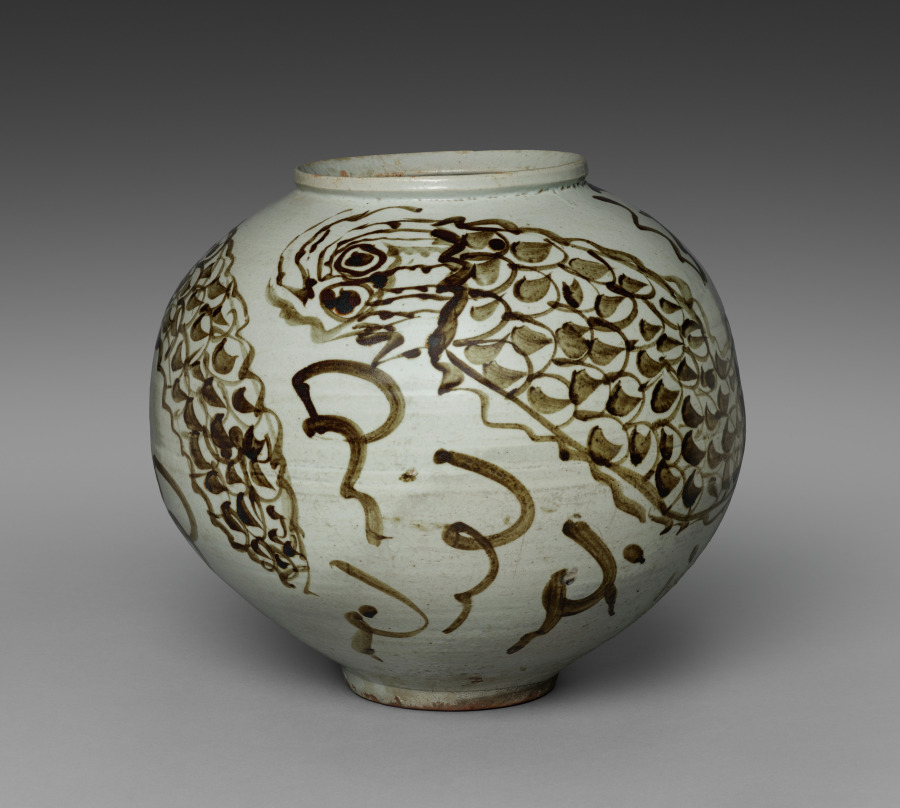
A mythical creature believed to have the power to make rain, the dragon is a prominent symbol of rulers in premodern East Asia; the image of dragons was used exclusively for the king's paraphernalia.

SERENDIPITYA little unexpected
FamiliarWeird

The museum identifies this ceramic as porcelain with underglaze iron.

The museum's collection notes: In traditional Korean art, dragons were used as an emblem of royalty. Over centuries, the ways of depicting this powerful mythical creature varied in response to artistic trends and socioeconomic changes. Here, the artist imagined with free-flowing calligraphic brushstrokes a whimsical dragon with bulging eyes who wraps his scaled body around the vessel. This piece was acquired from the London Gallery in Tokyo, Japan. Its owner, Tajima Mitsuru (born about 1936) is regarded as one of the pioneering Japanese art dealers to cultivate lasting relationships directly with collectors and museums in the United States.

The Cleveland Museum of ArtJar with Dragon and Clouds Design

Original explanation based on the sources above. Images carry their own reuse terms.