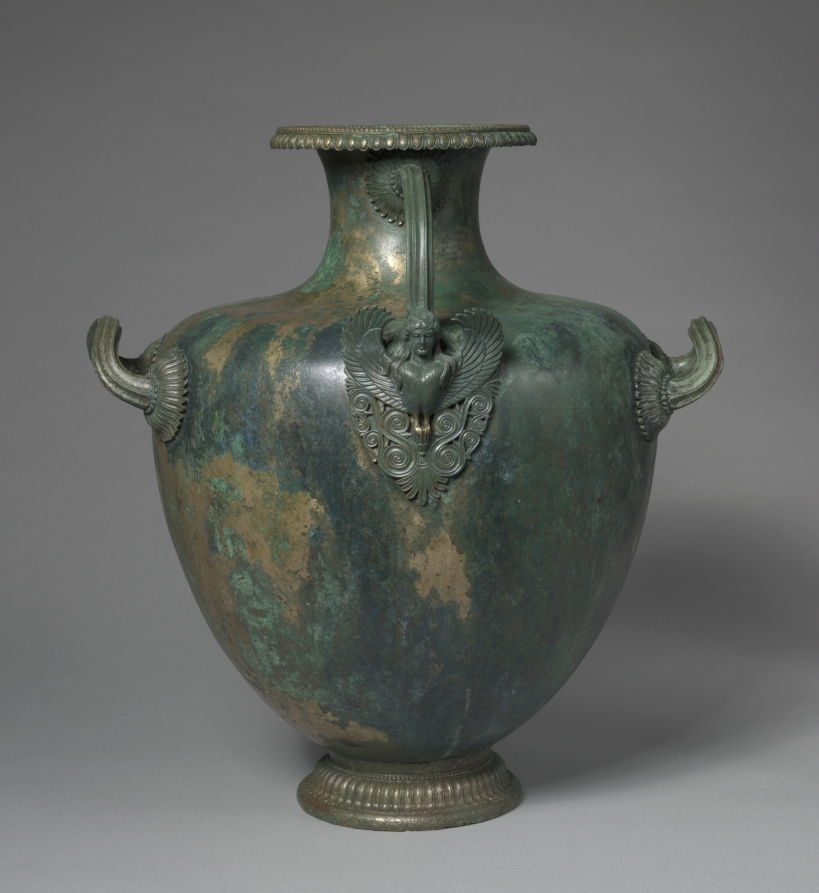
Greece / 425–400 BCE
Hydria
Hydria
The Cleveland Museum of Art catalogs Hydria as metalwork (Greece · 425–400 BCE).
WHY IT’S INTERESTING
This bronze vessel was likely used as a funerary urn.
Greece / 425–400 BCE
Hydria
The Cleveland Museum of Art catalogs Hydria as metalwork (Greece · 425–400 BCE).
This bronze vessel was likely used as a funerary urn.
A CLOSER LOOK
The museum identifies this metalwork as bronze.
The museum's collection notes: This vessel gets its name from a shape of earthenware jar that was used to carry water. This bronze hydria was probably used not to carry water but as a cinerary urn (kalpis). The figure on the handle is the mythological siren, a human-headed bird.
FOLLOW THE EVIDENCE
The Cleveland Museum of ArtHydriaOriginal explanation based on the sources above. Images carry their own reuse terms.