YOUR NEXT DISCOVERY/ArtifactsFollow your curiosity
Sideboard, from The Cleveland Museum of Art
The Cleveland Museum of Art · Open Access · Reuse terms

America, Pennsylvania, Philadelphia?, 19th century / c. 1855

Sideboard

Sideboard

The Cleveland Museum of Art catalogs Sideboard as furniture and woodwork (America, Pennsylvania, Philadelphia?, 19th century · c. 1855).

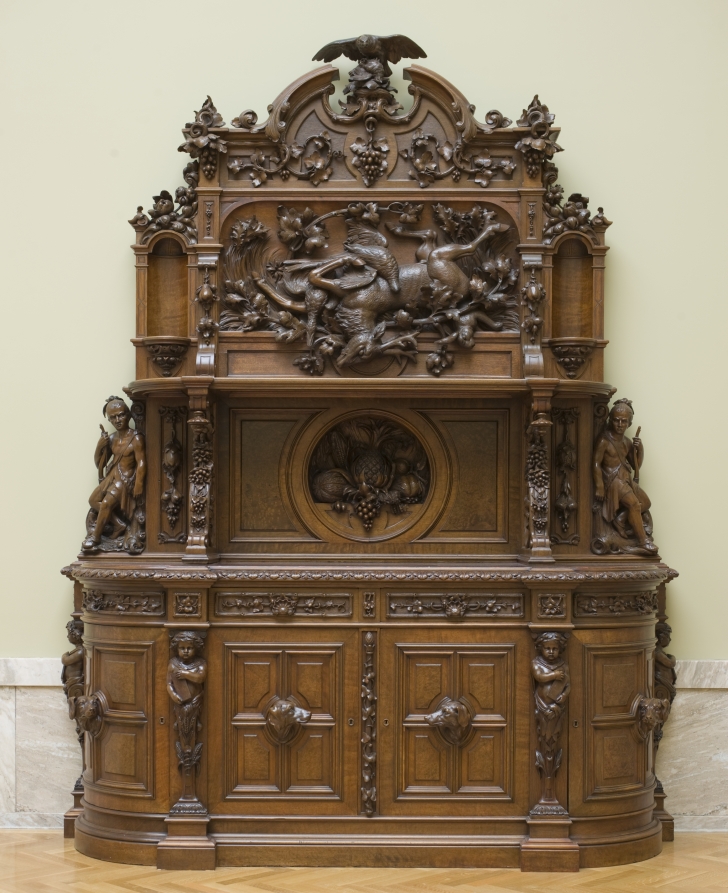
Luscious fruit, wild animals, and Native American figures are masterfully carved into this walnut sideboard. These decorative adornments were created for a distinctively American taste and would have symbolized abundance and wealth to visitors who encountered it within a grand dining room.

SERENDIPITYA little unexpected
FamiliarWeird

The museum identifies this furniture and woodwork as walnut and credits Joseph Alexis Bailly (American, 1825–1883).

The museum's collection notes: Newly acquired wealth from railroad production, manufacturing, and an expanded economy produced a new elite class of Americans who looked abroad for sources of decoration to adorn their lives. Grand, baronial furniture, reminiscent of German hunting lodges or French castles, became popular during the mid 1800s among America’s wealthy. Elaborate displays of abundance were reflected in the carvings of flora, fauna, and freshly hunted game. The depictions of Native American hunters on this example, most likely made in Philadelphia, may have meant that this piece was displayed at one of the many international expositions that occurred during this

The Cleveland Museum of ArtSideboard

Original explanation based on the sources above. Images carry their own reuse terms.