YOUR NEXT DISCOVERY/ArtifactsFollow your curiosity
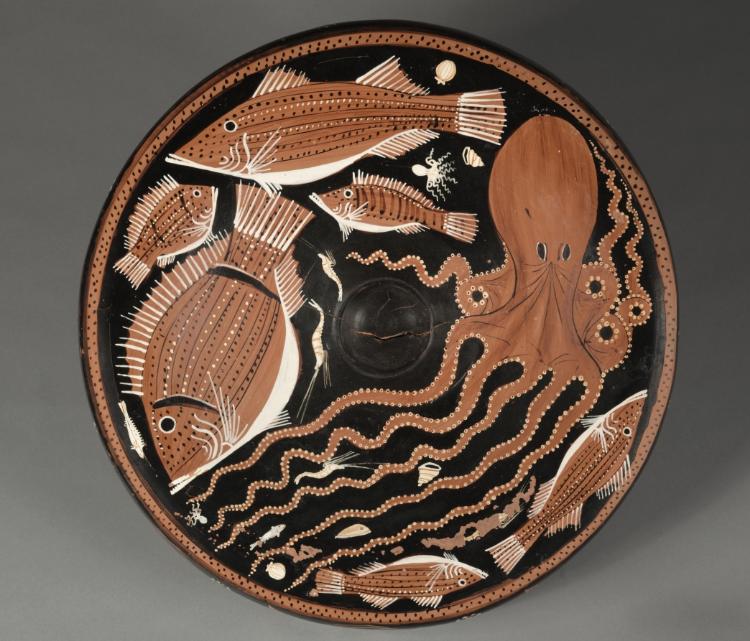
Red-Figure Fish Plate: Octopi, Mullet, Bream, Shellfish, from The Cleveland Museum of Art
The Cleveland Museum of Art · Open Access · Reuse terms

South Italian, Paestan / c. 340–330 BCE

Red-Figure Fish Plate: Octopi, Mullet, Bream, Shellfish

Red-Figure Fish Plate: Octopi, Mullet, Bream, Shellfish

The Cleveland Museum of Art catalogs Red-Figure Fish Plate: Octopi, Mullet, Bream, Shellfish as ceramic (South Italian, Paestan · c. 340–330 BCE).

Perfect for serving seafood, this plate features images of sea creatures and a central well for dipping or collecting juices.

SERENDIPITYA little unexpected
FamiliarWeird

The museum identifies this ceramic as ceramic and credits Asteas/Python Workshop (South Italian, Paestan, active c. 360–320 BCE).

The museum's collection notes: Although first developed in Athens, red-figure fish plates became especially popular in South Italy and Sicily in the 300s BC. All feature a short foot and a small central depression, but those produced in the workshop of Asteas and Python, like this one, are the largest and most ornate. Archaeologists have closely studied the fish and other sea creatures represented, identifying many of them with species still found (and eaten) in the Mediterranean; included here are octopi, mullet, bream, and various shellfish.

The Cleveland Museum of ArtRed-Figure Fish Plate: Octopi, Mullet, Bream, Shellfish

Original explanation based on the sources above. Images carry their own reuse terms.