YOUR NEXT DISCOVERY/ArtifactsFollow your curiosity
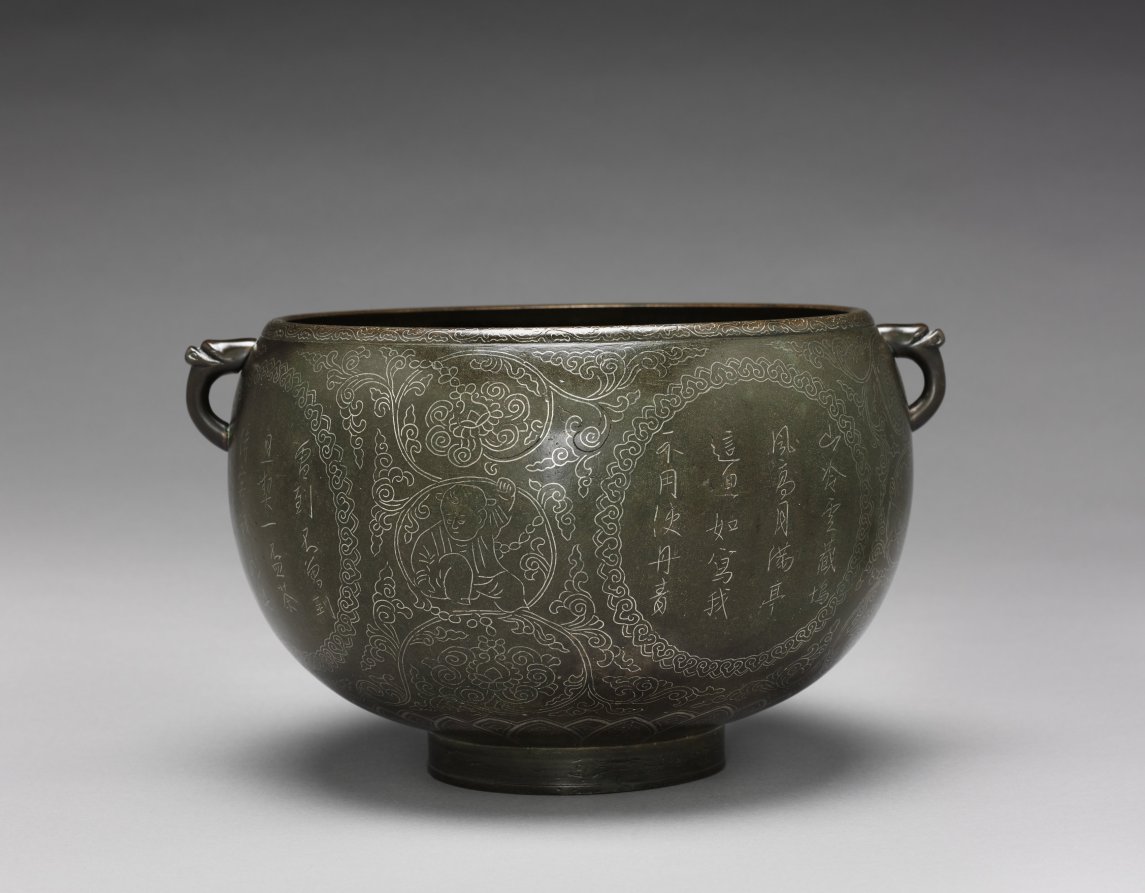
Basin with Inscribed Figures and Calligraphy, from The Cleveland Museum of Art
The Cleveland Museum of Art · Open Access · Reuse terms

Korea, Goryeo dynasty (918–1392) / 1100s–1200s

Basin with Inscribed Figures and Calligraphy

Basin with Inscribed Figures and Calligraphy

The Cleveland Museum of Art catalogs Basin with Inscribed Figures and Calligraphy as metalwork (Korea, Goryeo dynasty (918–1392) · 1100s–1200s).

A child, one of the main decorative elements for this basin, is possibly a young Buddhist pilgrim named Sudhana, who took a long spiritual journey to search for enlightenment.

SERENDIPITYA little unexpected
FamiliarWeird

The museum identifies this metalwork as bronze.

The museum's collection notes: This bronze basin may have been used for containing purified water. What makes this work charming is its intricate decoration done in silver inlay: the five-character, four-line poems interspersed among images of a child. The poems, which evoke the concept of nonattachment and nonduality, were written by Buddhist monks.

The Cleveland Museum of ArtBasin with Inscribed Figures and Calligraphy

Original explanation based on the sources above. Images carry their own reuse terms.