A CLOSER LOOK
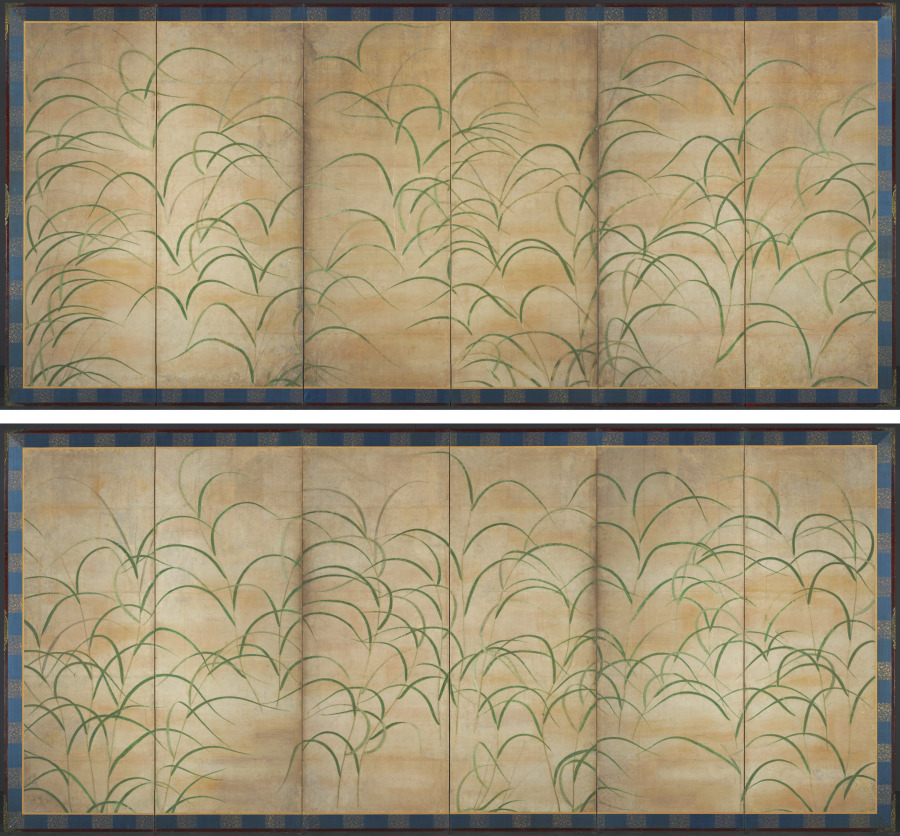
The museum identifies this painting as Pair of six-panel folding screens; ink, color, and gold on paper.
The museum's collection notes: Susuki grass has a seasonal association with autumn in the Japanese visual and literary tradition. It is one of the “Seven Flowers of Autumn,” along with bush clover, arrowroot, pink, patrinia , mistflower, and bellflower. This composition immerses the beholder in a field of grasses and golden bands of mist. The design may have served as a backdrop for poems brushed in ink on decorated papers and attached to the surface of the screens, a practice with a long tradition in Japan.