A CLOSER LOOK
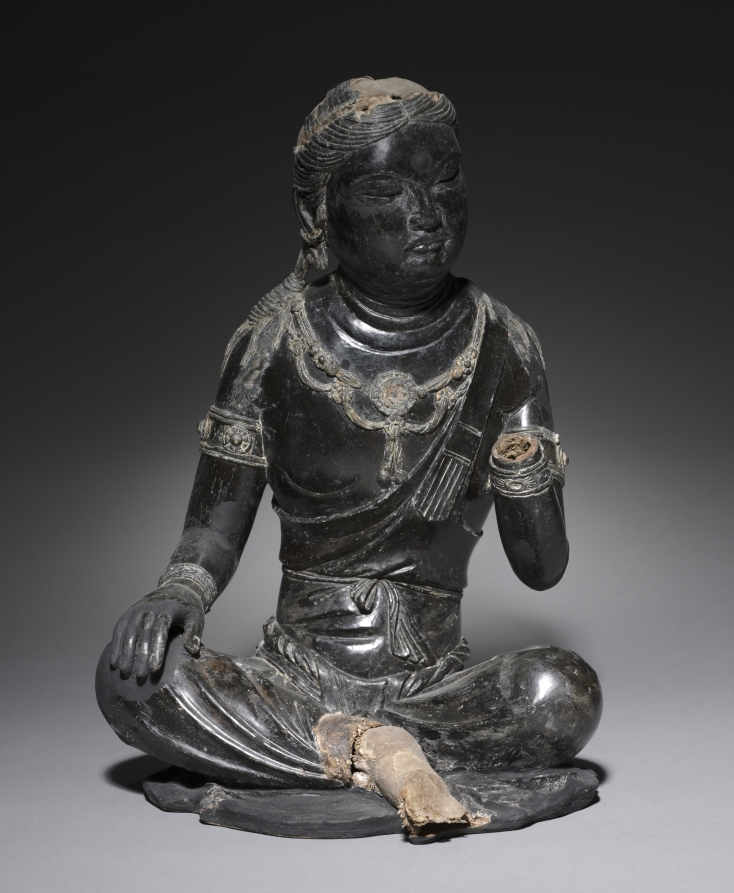
The museum identifies this sculpture as dry lacquer.
The museum's collection notes: The bodhisattva, an enlightened being dedicated to the spiritual awakening of all beings, is shown sitting in a relaxed pose, the eyes half-closed in an expression of profound meditation. The statue is modeled in a sensuous manner. It is made using the dry lacquer technique whereby a clay core is first constructed and then overlaid with fabrics saturated with lacquer. Once the lacquer layers are set, the core is removed. This kind of hollow dry lacquer statue is lightweight and easy to carry. The piece once suffered from severe surface retouching that distorted its original beauty. The museum's conservation work has removed coats of overpaint