YOUR NEXT DISCOVERY/ArtifactsFollow your curiosity
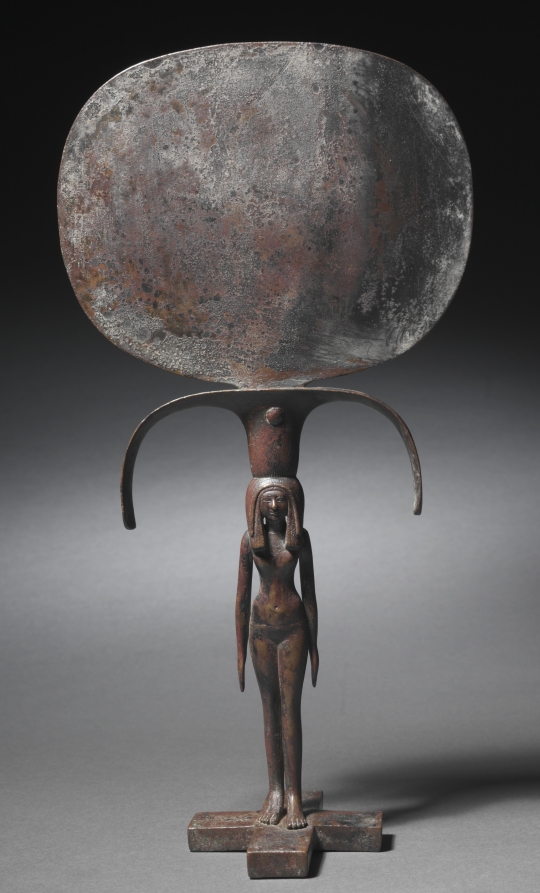
Caryatid Mirror, from The Cleveland Museum of Art
The Cleveland Museum of Art · Open Access · Reuse terms

Egypt, New Kingdom (1540–1069 BCE), Dynasty 18 / c. 1540–1296 BCE

Caryatid Mirror

Caryatid Mirror

The Cleveland Museum of Art catalogs Caryatid Mirror as cosmetic objects (Egypt, New Kingdom (1540–1069 BCE), Dynasty 18 · c. 1540–1296 BCE).

When they were made, this mirror was polished to a brilliant shine; the marvelous colored patina it has since acquired is the result of being buried for years in the ground.

SERENDIPITYA little unexpected
FamiliarWeird

The museum identifies this cosmetic objects as bronze with black copper inlay?.

The museum's collection notes: This superb mirror has an oval disk and a handle in the form of a nubile young girl, entirely naked except for her elaborately braided tripartite wig, broad collar, and a girdle of wallet beads. She stands on a cruciform base, with her left foot slightly advanced and her hands at her sides. On her head and supporting the disk is a papyrus umbel with flaring tips. Mirrors with handles in the form of naked young girls were the height of fashion in mid-Dynasty 18; numerous examples exist. This mirror is perhaps the finest of its kind. The cruciform base is unusual, if not unique. The iconography is understandable in relation to the goddess Hatho

The Cleveland Museum of ArtCaryatid Mirror

Original explanation based on the sources above. Images carry their own reuse terms.