YOUR NEXT DISCOVERY/ArtifactsFollow your curiosity
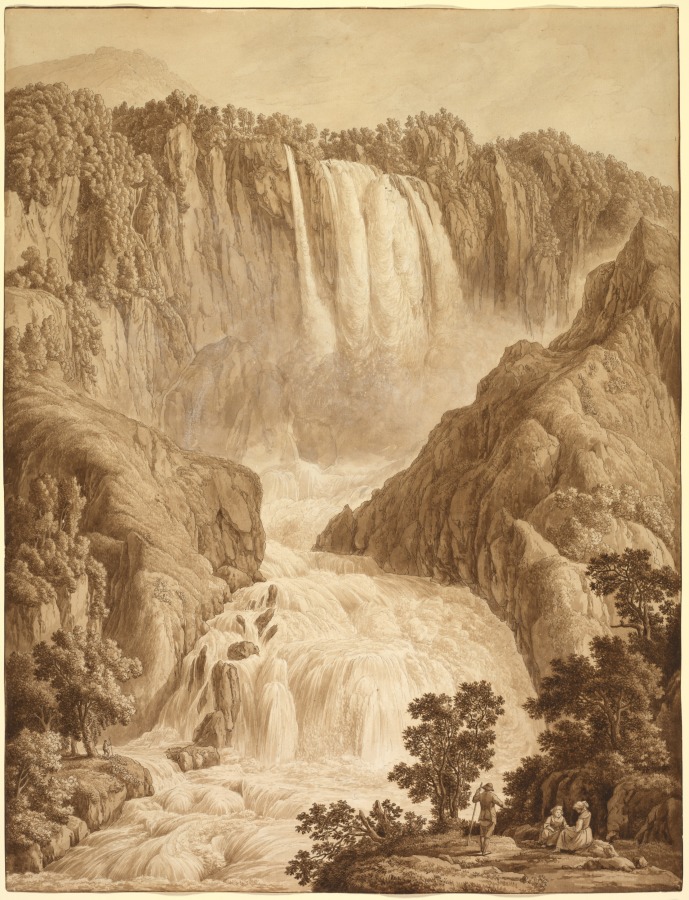
The Waterfall of Marmore at Terni, from The Cleveland Museum of Art
The Cleveland Museum of Art · Open Access · Reuse terms

Germany, 18th century / 1776–78

The Waterfall of Marmore at Terni

The Waterfall of Marmore at Terni

The Cleveland Museum of Art catalogs The Waterfall of Marmore at Terni as drawing (Germany, 18th century · 1776–78).

This work recalls the words written by the artist's close friend, Johann Wolfgang von Goethe, who declared that an artist should "give his work of art a content and a form through which it appears both natural and beyond Nature."

SERENDIPITYA little unexpected
FamiliarWeird

The museum identifies this drawing as pen and black ink, brush and brown wash, with white gouache and graphite and credits Philipp Hackert (German, 1737–1807).

The museum's collection notes: Influenced by the landscapes of Claude Lorrain and seventeenth-century Dutch artists, the German Jakob Philipp Hackert was one of the most successful landscape artists based in late 18th-century Rome. His precise renderings of beautiful and historic sites attracted an international clientele on the European grand tour. This finished drawing depicts one of Italy's most spectacular natural phenomena, the Marmore waterfall at Terni, located north of Rome. Hackert carefully crafted the composition so that the detailed cliffs covered with foliage frame the tiered cascade from its soaring heights to its final emptying in the foreground. Hackert was

The Cleveland Museum of ArtThe Waterfall of Marmore at Terni

Original explanation based on the sources above. Images carry their own reuse terms.