A CLOSER LOOK
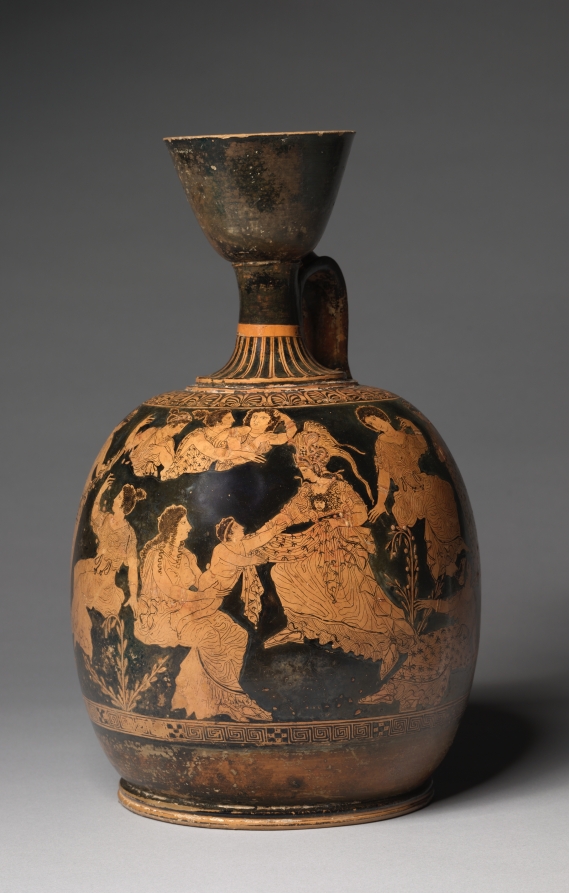
The museum identifies this ceramic as ceramic, with gilding and credits Meidias Painter (Greek, Attic, active c. 420–400 BCE).
The museum's collection notes: The central group on this vase shows the seated earth goddess Ge (also known as Gaia) handing her baby, Erichthonios, to Athena. Conceived from the seed of Hephaistos, Erichthonios would go on to become a king of Athens, and the story of his birth became popular in Athenian art of the fifth century BC. Other representations include Hephaistos as well as Kekrops, the mythical first king of Athens, sometimes together with Zeus and other deities. But this one includes only female onlookers—likely the three daughters of Kekrops watching from above, with Aphrodite and several abstract personifications such as Peitho (Persuasion) and Eudaimonia (Ha