YOUR NEXT DISCOVERY/ArtifactsFollow your curiosity
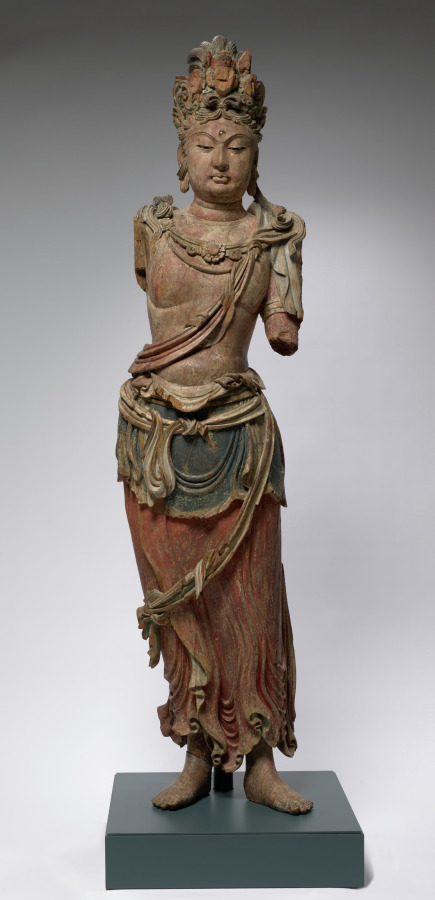
Eleven-Headed Guanyin, from The Cleveland Museum of Art
The Cleveland Museum of Art · Open Access · Reuse terms

China, late Northern Song dynasty (960-1127) - Jin dynasty (1115-1234) / 1100–1200

Eleven-Headed Guanyin

Eleven-Headed Guanyin

The Cleveland Museum of Art catalogs Eleven-Headed Guanyin as sculpture (China, late Northern Song dynasty (960-1127) - Jin dynasty (1115-1234) · 1100–1200).

This Guanyin is carved from a single block of willow (genus Salix sp. ).

SERENDIPITYA little unexpected
FamiliarWeird

The museum identifies this sculpture as wood with polychromy and cut gold.

The museum's collection notes: The bodhisattva is an enlightened being dedicated to the spiritual awakening of all beings. The compassionate bodhisattva Guanyin, in a variety of manifestations, is probably the most popular deity of worship in Chinese Buddhism. In the Esoteric Buddhist form shown here, this standing Guanyin has a total of eleven heads, with smaller ones above the principal head. The uppermost head represents the Buddha Amitabha, to whom he is closely related. The eleven heads symbolize the Buddha’s steps on the path to enlightenment.

The Cleveland Museum of ArtEleven-Headed Guanyin

Original explanation based on the sources above. Images carry their own reuse terms.