
Italy, Venice / c. 1720–30
Andromeda
Andromeda
The Cleveland Museum of Art catalogs Andromeda as sculpture (Italy, Venice · c. 1720–30).
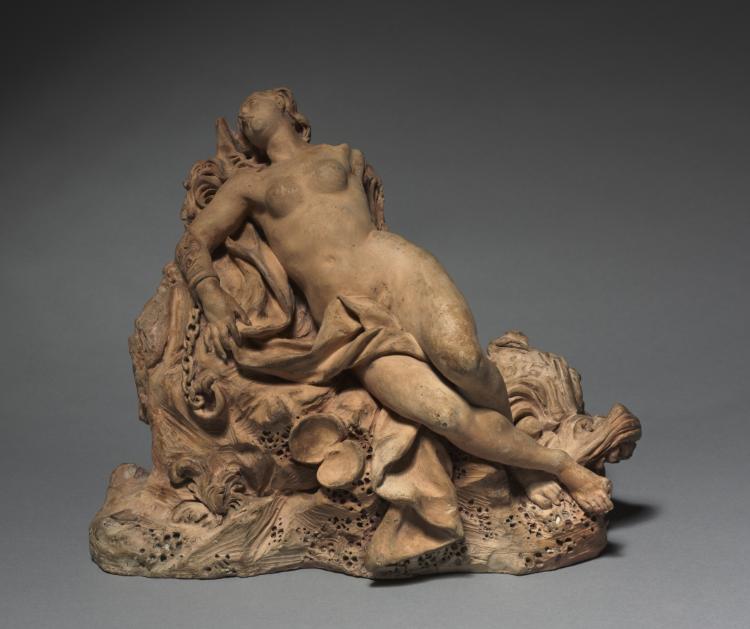
Tarsia sculptred the clay to depict different textures: coral-like rock, smooth skin, and rigid scales.

Italy, Venice / c. 1720–30
Andromeda
The Cleveland Museum of Art catalogs Andromeda as sculpture (Italy, Venice · c. 1720–30).
Tarsia sculptred the clay to depict different textures: coral-like rock, smooth skin, and rigid scales.
A CLOSER LOOK
The museum identifies this sculpture as terracotta and credits Antonio Tarsia (Italian, 1663–1739).
The museum's collection notes: To stop attacks by a sea monster sent to punish Queen Cassiopeia for bragging that she was more beautiful than the nymphs of the sea, an oracle decreed that her virgin daughter, Andromeda, be tied to a rock and sacrificed to the creature. The hero Perseus would eventually save her, but artists often chose this moment as an opportunity to display a young, nude woman, justified by a veneer of mythology.
FOLLOW THE EVIDENCE
The Cleveland Museum of ArtAndromedaOriginal explanation based on the sources above. Images carry their own reuse terms.