YOUR NEXT DISCOVERY/ArtifactsFollow your curiosity
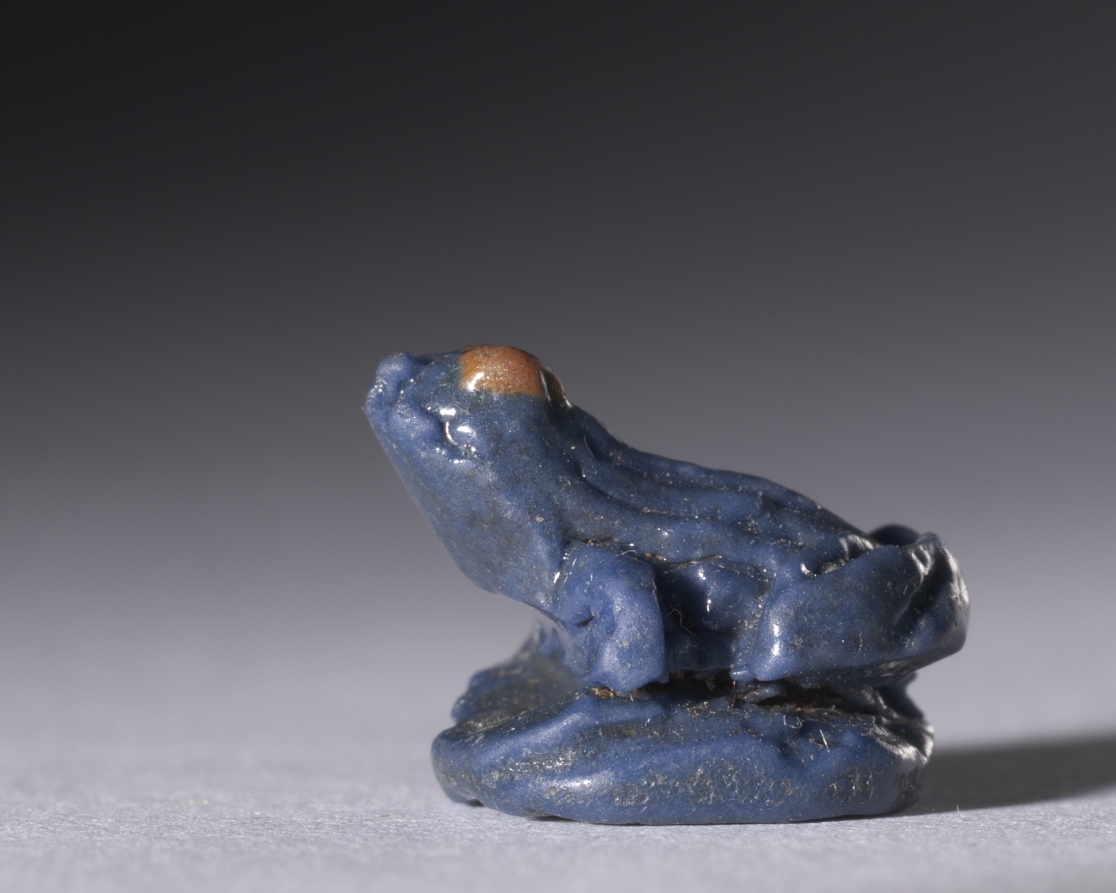
Frog Amulet, from The Cleveland Museum of Art
The Cleveland Museum of Art · Open Access · Reuse terms

Egypt, New Kingdom (1540–1069 BCE), Dynasty 18 / c. 1380–1330 BCE

Frog Amulet

Frog Amulet

The Cleveland Museum of Art catalogs Frog Amulet as amulets (Egypt, New Kingdom (1540–1069 BCE), Dynasty 18 · c. 1380–1330 BCE).

This frog amulet was made from faience, a fine type of self-glazing ceramic that is characteristically turquoise blue. It is a representation of Heqet, the frog goddess associated with childbirth and fertility.

SERENDIPITYA little unexpected
FamiliarWeird

The museum identifies this amulets as polychrome faience.

The museum's collection notes: The frog, because of its numerous offspring, was a symbol of fertility. In fact, the hieroglyphic sign for 100,000 was a tadpole. Frog amulets were very popular both in semiprecious stone and in faience, and were worn by women hoping for an easy delivery. Both sexes wore the frog in expectation of a successful rebirth in the afterlife.

The Cleveland Museum of ArtFrog Amulet

Original explanation based on the sources above. Images carry their own reuse terms.