A CLOSER LOOK
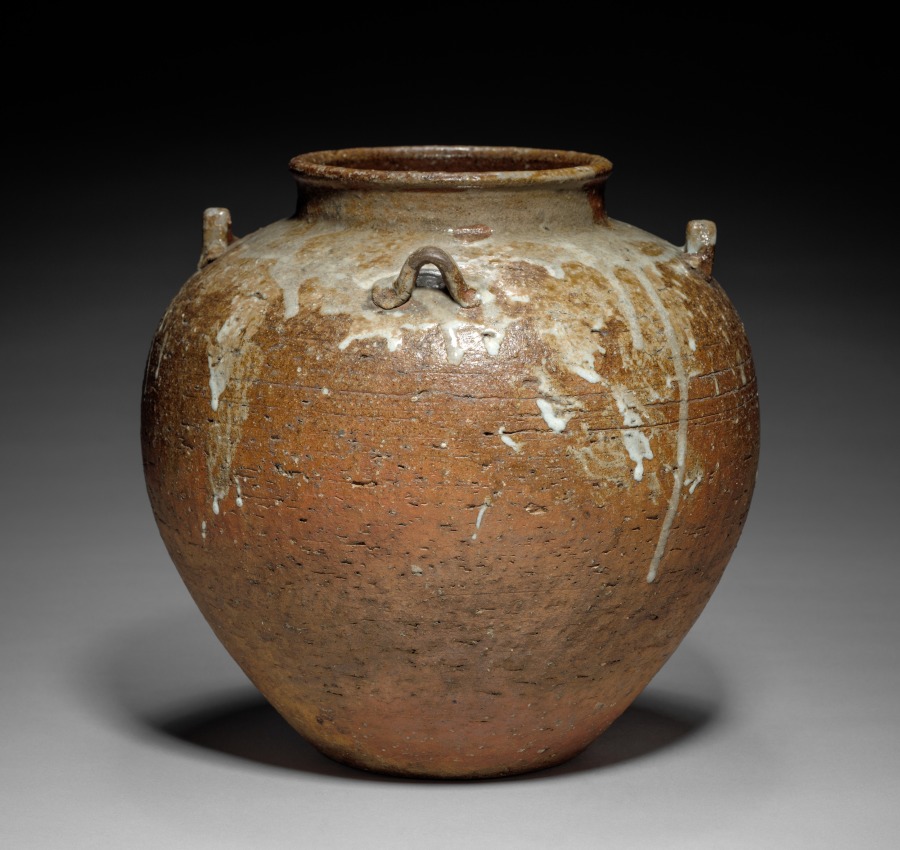
The museum identifies this ceramic as Stoneware with white glaze (Shigaraki style) and credits Nonomura Ninsei (Japanese, active 1640s–90s).
The museum's collection notes: In this tea storage jar, Nonomura Ninsei reinterpreted a Shigaraki stoneware—made to hold agricultural products and known for its warm orange color, asymmetrical round forms, and irregular natural ash glazes—to produce a more refined piece that would appeal to tea masters seeking a touch of rusticity. In Japanese tea culture, hanging scroll paintings or calligraphy are placed in the tokonoma , or viewing alcove, for participants to admire and discuss along with the utensils used in the gathering. The scrolls are typically paired with vessels containing seasonal floral arrangements.