A CLOSER LOOK
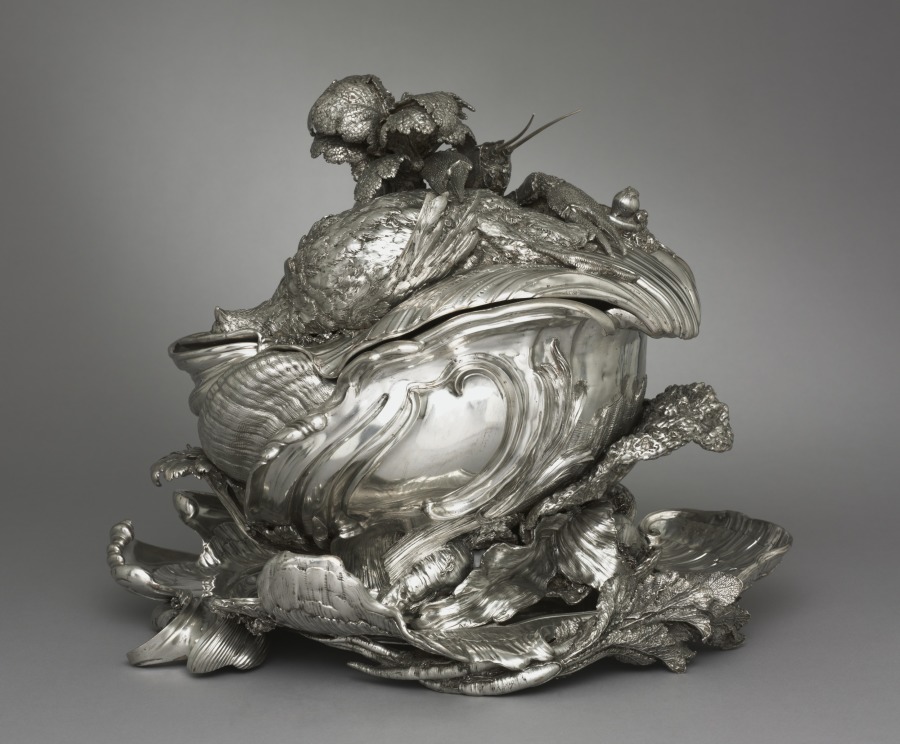
The museum identifies this silver as silver and credits Juste-Aurèle Meissonnier (French, 1695–1750).
The museum's collection notes: This tureen exemplifies the French Rococo style, an artistic movement celebrating naturalistic forms that developed in Paris during the early 1700s. In contrast to classical, controlled symmetry, Rococo forms morph, twist, and spill into the space around them. Meissonnier embellished this tureen in a picturesque arrangement of vegetables and creatures, transforming a utilitarian object into a decadent display of wealth and abundance. This masterpiece comes from a set of two tureens commissioned by the English Duke of Kingston during an extended stay in Paris in the 1730s.