YOUR NEXT DISCOVERY/ArtifactsFollow your curiosity
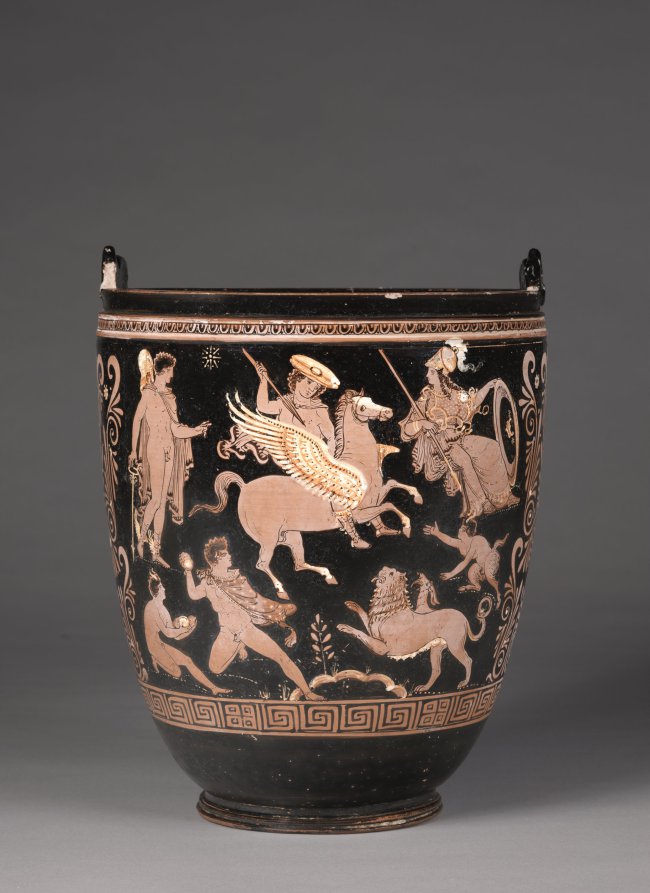
Red-Figure Situla (Deep Bucket): Bellerophon Slaying Chimaera (A); Dionysos, Maenads, Eros (B), from The Cleveland Museum of Art
The Cleveland Museum of Art · Open Access · Reuse terms

South Italian, Apulian / c. 350 BCE

Red-Figure Situla (Deep Bucket): Bellerophon Slaying Chimaera (A); Dionysos, Maenads, Eros (B)

Red-Figure Situla (Deep Bucket): Bellerophon Slaying Chimaera (A); Dionysos, Maenads, Eros (B)

The Cleveland Museum of Art catalogs Red-Figure Situla (Deep Bucket): Bellerophon Slaying Chimaera (A); Dionysos, Maenads, Eros (B) as ceramic (South Italian, Apulian · c. 350 BCE).

The mythical fire-breathing Chimaera comprises a lion with goat’s head and neck, plus a snake-headed tail.

SERENDIPITYA little unexpected
FamiliarWeird

The museum identifies this ceramic as ceramic and credits Group of the Dublin Situlae.

The museum's collection notes: The dramatic scene on this bucket-like vessel (known as a situla, more common in bronze) shows the hero Bellerophon astride his winged horse Pegasos, taking aim with a spear at the monstrous Chimaera. Combining parts of a goat and snake with the body of a lion, this fearsome fire-breathing creature lived in Lycia (now southwest Turkey), where fire still burns from natural vents in the rock. Also present on the vase are Hermes and Athena, watching Bellerophon, as well as a small Pan and two young satyrs with stones. Are they taking aim at Pegasos or the Chimaera? Dionysos, Eros, and two maenads appear on the reverse.

The Cleveland Museum of ArtRed-Figure Situla (Deep Bucket): Bellerophon Slaying Chimaera (A); Dionysos, Maenads, Eros (B)

Original explanation based on the sources above. Images carry their own reuse terms.