YOUR NEXT DISCOVERY/ArtifactsFollow your curiosity
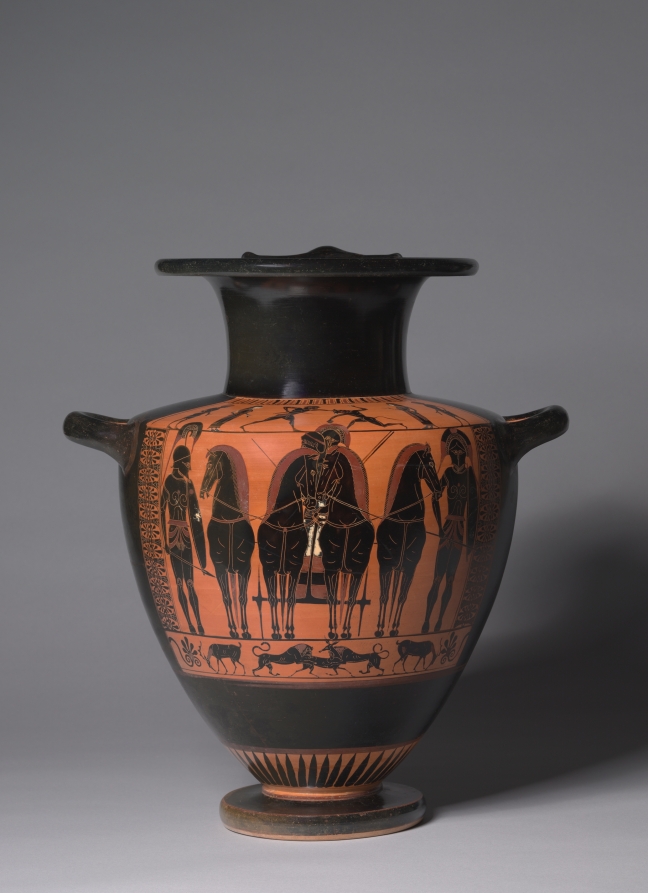
Black-Figure Hydria (Water Vessel): Frontal Quadriga (Body); Theseus and Minotaur (Shoulder), from The Cleveland Museum of Art
The Cleveland Museum of Art · Open Access · Reuse terms

Greece, Attic / c. 520 BCE

Black-Figure Hydria (Water Vessel): Frontal Quadriga (Body); Theseus and Minotaur (Shoulder)

Black-Figure Hydria (Water Vessel): Frontal Quadriga (Body); Theseus and Minotaur (Shoulder)

The Cleveland Museum of Art catalogs Black-Figure Hydria (Water Vessel): Frontal Quadriga (Body); Theseus and Minotaur (Shoulder) as ceramic (Greece, Attic · c. 520 BCE).

This type of water vessel, a hydria , takes its name from hudor , Greek for water (and still familiar in the English root hydro ).

SERENDIPITYA little unexpected
FamiliarWeird

The museum identifies this ceramic as ceramic and credits Antimenes Painter (Greek, Attic, active c. 530–510 BCE).

The museum's collection notes: Although their subjects differ, the three fields of figured decoration on this vessel relate to one another metaphorically through the theme of victory. Just as Theseus defeats the Minotaur on the shoulder, two lions converge on a deer in the predella (the small, lowermost panel). In the largest panel, victory is still to come, presumably for all three warriors shown: one in the chariot behind his driver, and one on foot on either side. Somewhat unusually, two of the warriors look directly out at the viewer, their frontal faces an interesting complement to the much more common frontal chariot.

The Cleveland Museum of ArtBlack-Figure Hydria (Water Vessel): Frontal Quadriga (Body); Theseus and Minotaur (Shoulder)

Original explanation based on the sources above. Images carry their own reuse terms.