Etruscan / 300s BCE
Fibula (Pin)
Fibula (Pin)
The Cleveland Museum of Art catalogs Fibula (Pin) as jewelry (Etruscan · 300s BCE).
WHY IT’S INTERESTING
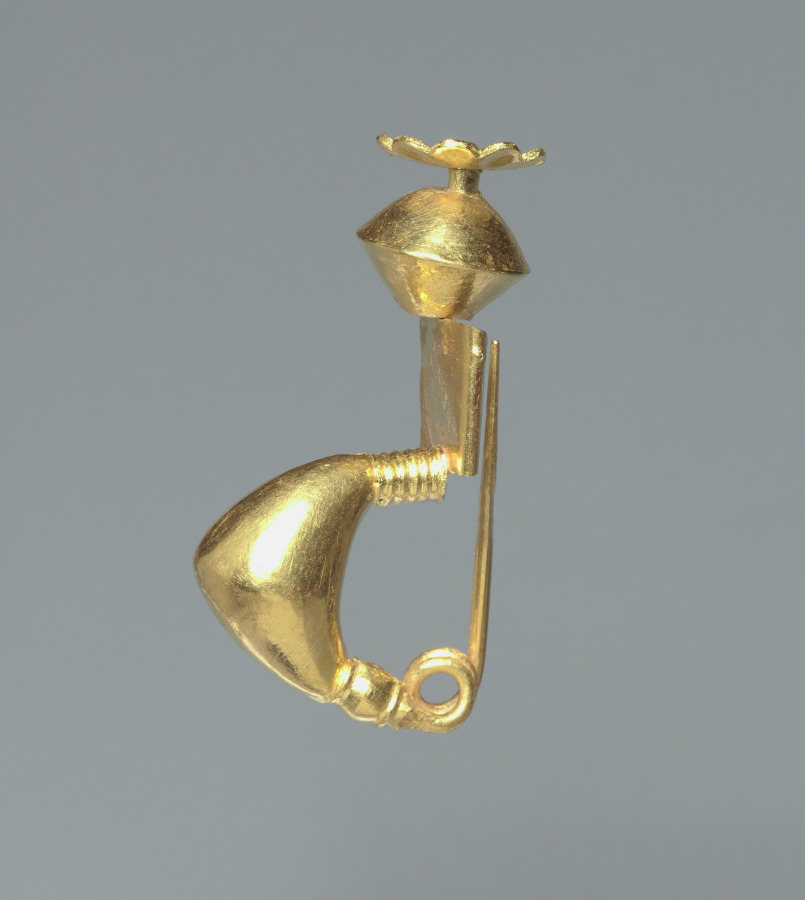
This fibula was cast in three parts, the bow and pin, plaque, and bead, using the lost wax method.
Etruscan / 300s BCE
Fibula (Pin)
The Cleveland Museum of Art catalogs Fibula (Pin) as jewelry (Etruscan · 300s BCE).
This fibula was cast in three parts, the bow and pin, plaque, and bead, using the lost wax method.
A CLOSER LOOK
The museum identifies this jewelry as gold.
The museum's collection notes: This gold fibula consists of a leech-shaped bow attached to a pin, a plaque, and a biconical bead. A nine-petaled flower tops the bead. The fibula was likely used to fasten clothes by gathering fabric together. Unlike silver and bronze, gold does not easily tarnish.
FOLLOW THE EVIDENCE
The Cleveland Museum of ArtFibula (Pin)Original explanation based on the sources above. Images carry their own reuse terms.