A CLOSER LOOK
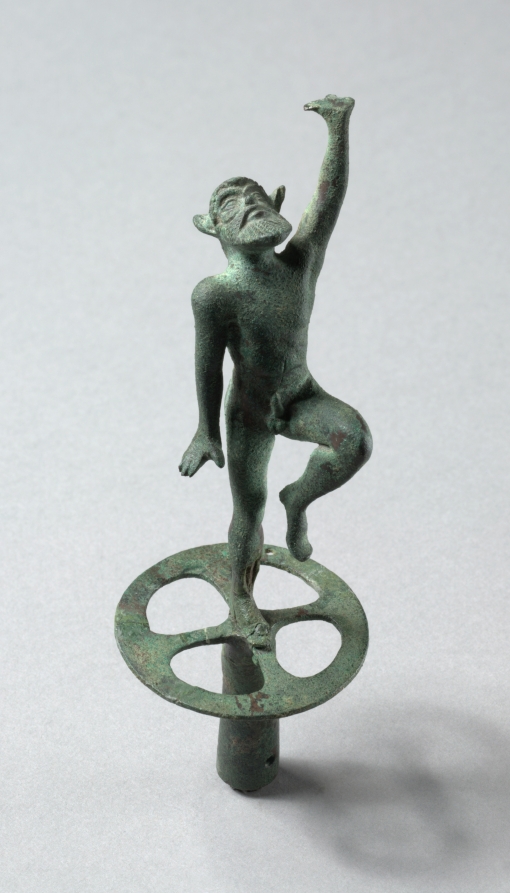
The museum identifies this sculpture as bronze.
The museum's collection notes: This diminutive dancing satyr, identifiable by his snub nose and equine ears (though without a tail), lifts his leg and reaches with an upstretched arm toward a dish, now lost. The disc and cylinder on which he stands likely rested atop a much taller post, with a larger disc or dish below, as preserved in more complete examples and illustrated on numerous ancient vases. In the drinking game kottabos , known by its Greek name but also popular in Etruria, the goal was to knock a dish off its precarious perch, in this case the hand of the dancing satyr, using only the wine dregs in your cup.