YOUR NEXT DISCOVERY/ArtifactsFollow your curiosity
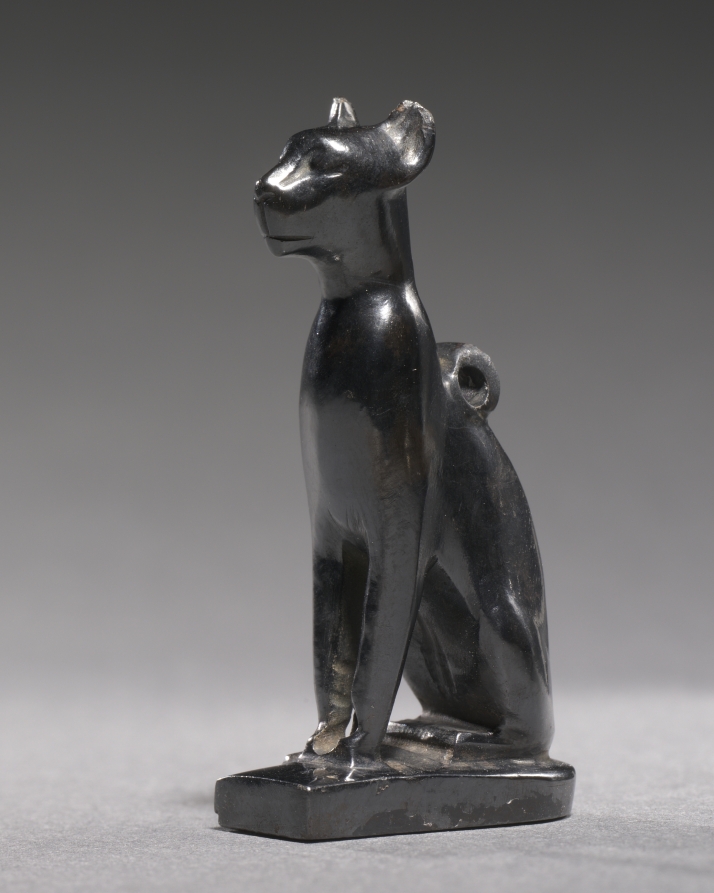
Amulet of Bastet, from The Cleveland Museum of Art
The Cleveland Museum of Art · Open Access · Reuse terms

Egypt, Third Intermediate (1069–715 BCE) / c. 1069–715 BCE

Amulet of Bastet

Amulet of Bastet

The Cleveland Museum of Art catalogs Amulet of Bastet as amulets (Egypt, Third Intermediate (1069–715 BCE) · c. 1069–715 BCE).

This object was in the collection of Howard Carter—the man who discovered the intact tomb of Tutankhamun—until his death.

SERENDIPITYA little unexpected
FamiliarWeird

The museum identifies this amulets as hematite.

The museum's collection notes: Elegantly seated on a low base, its tail curled around its left side, this tiny cat, sacred animal of the goddess Bastet, is a sculptural tour de force. The front legs are carved entirely in openwork. The base, an amalgam of the hieroglyphs for "ointment jar" (also used in the writing the name of the goddess Bastet), and "protection" is admirably contoured to the animal's body. On the back is a loop for suspension.

The Cleveland Museum of ArtAmulet of Bastet

Original explanation based on the sources above. Images carry their own reuse terms.