YOUR NEXT DISCOVERY/ArtifactsFollow your curiosity
Pan and Syrinx, from The Cleveland Museum of Art
The Cleveland Museum of Art · Open Access · Reuse terms

France / 1720

Pan and Syrinx

Pan and Syrinx

The Cleveland Museum of Art catalogs Pan and Syrinx as painting (France · 1720).

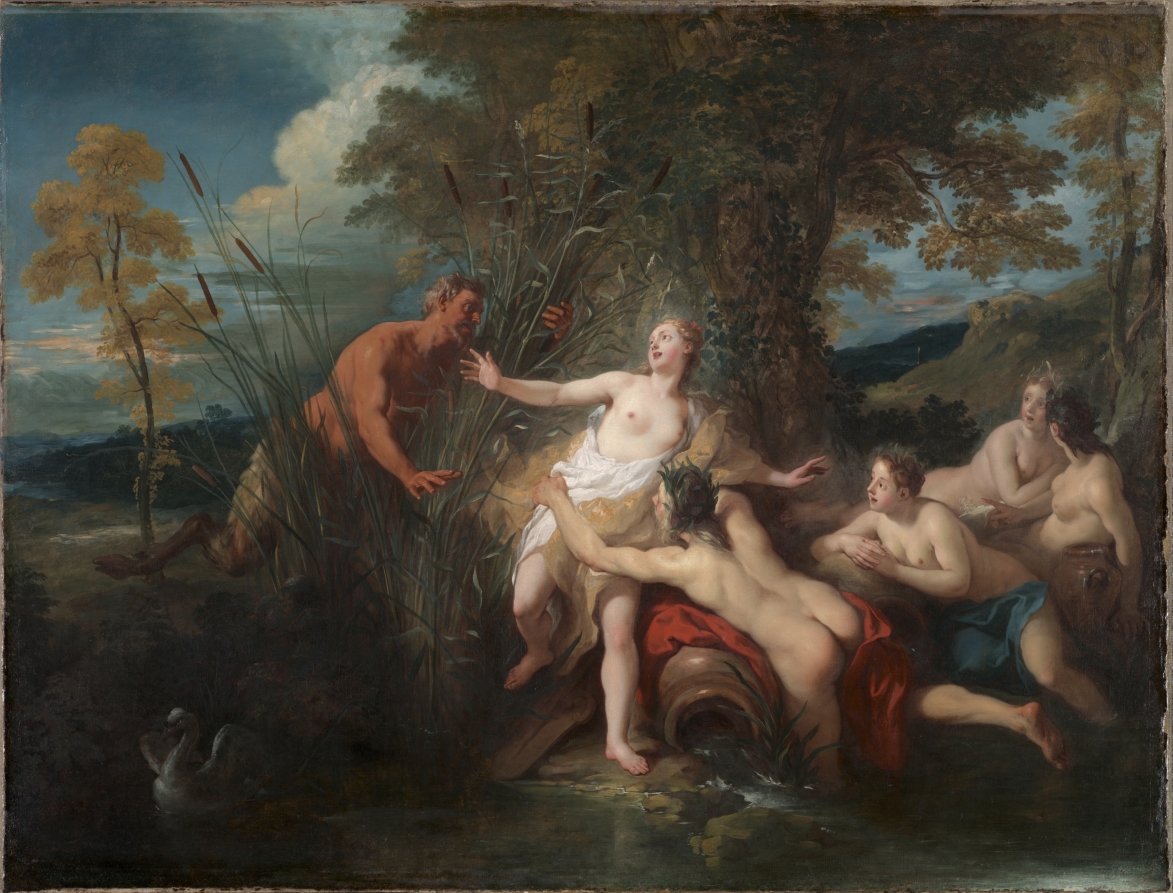
Subjects drawn from classical mythology posed a challenge for painters: they demanded skill in depicting the human body in complex poses, as well as knowledge of ancient texts and an ability to interpret them imaginatively. Jean François de Troy’s rich colors and voluptuous figure types were ideal for depicting the sor

SERENDIPITYA little unexpected
FamiliarWeird

The museum identifies this painting as oil on canvas and credits Jean François de Troy (French, 1679–1752).

The museum's collection notes: Subjects drawn from classical mythology posed a challenge for painters: they demanded skill in depicting the human body in complex poses, as well as knowledge of ancient texts and an ability to interpret them imaginatively. Jean François de Troy’s rich colors and voluptuous figure types were ideal for depicting the sorts of mythological subjects favored by his elite patrons, which generally focused on themes of love. In a myth recounted in the Roman poet Ovid’s Metamorphoses , the nymph Syrinx fled from the lecherous advances of the god Pan. Trapped at the edge of a river, she begged for a way to escape, and the gods transformed her into reed

The Cleveland Museum of ArtPan and Syrinx

Original explanation based on the sources above. Images carry their own reuse terms.