A CLOSER LOOK
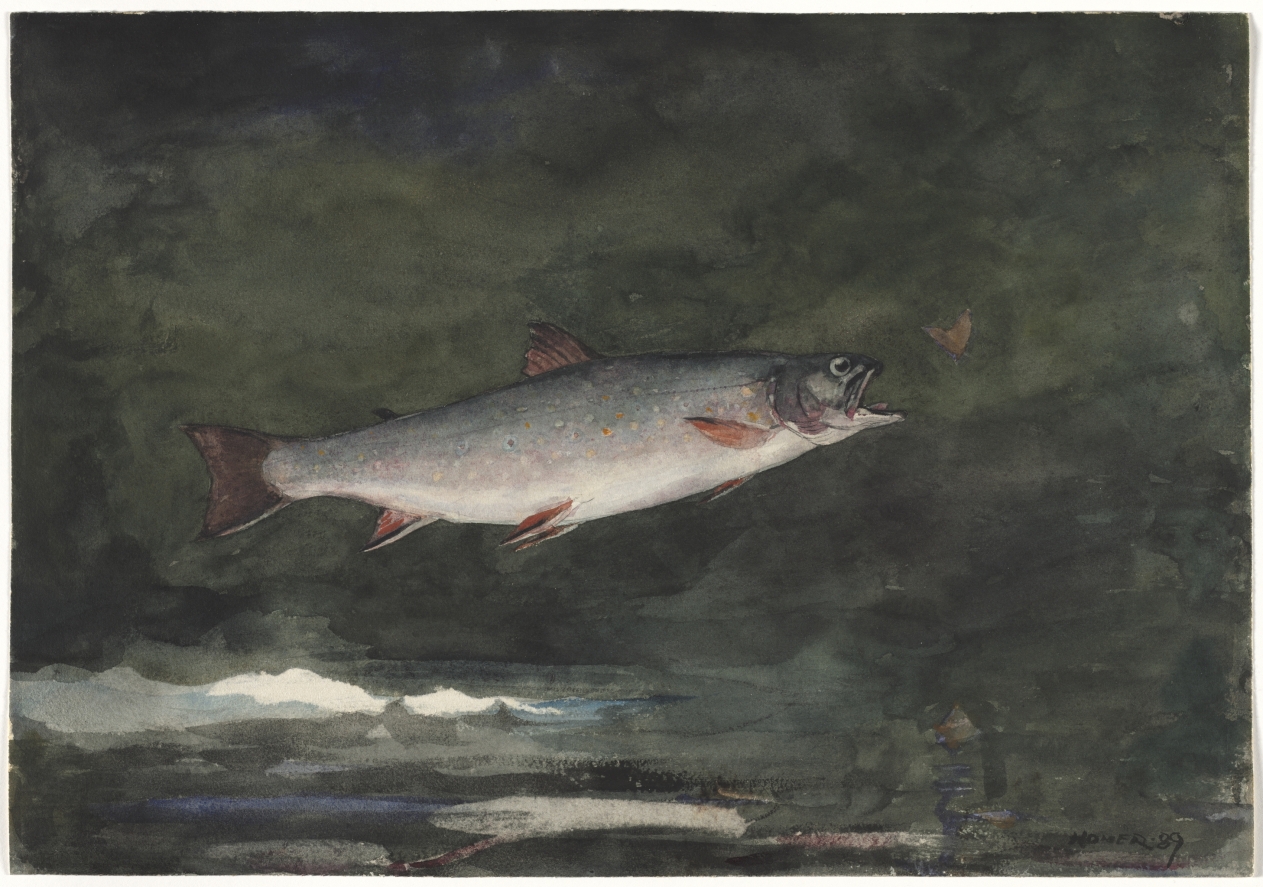
The museum identifies this drawing as watercolor over graphite and credits Winslow Homer (American, 1836–1910).
The museum's collection notes: In 1886, Winslow Homer began to produce oil paintings and watercolors of subjects in the Adirondack Mountains, where he and his brother Charles had fished and hunted since the 1870s. In Leaping Trout , a silvery trout propels itself from the water in pursuit of a hapless insect or a fisherman’s fly. Homer’s choice to adopt the fish’s perspective, rather than a fisherman’s, is quite unconventional and heightens the drama and immediacy of the scene. His technique, influenced by the free brushwork of French Impressionism, similarly animates his still-life subject. Luminous washes of transparent blue and grey watercolor suggest the fish’s iridesc