A CLOSER LOOK
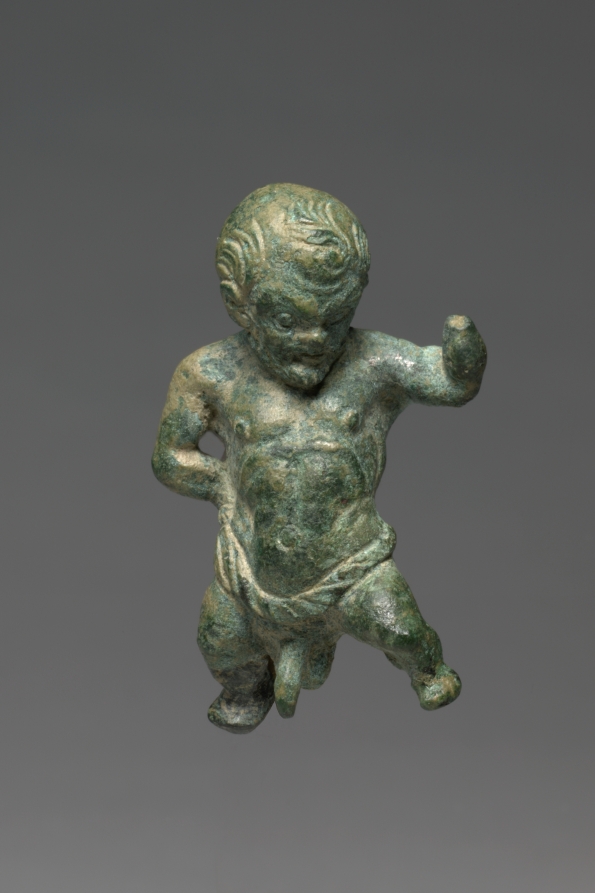
The museum identifies this sculpture as bronze.
The museum's collection notes: This small, bearded figure wears a twisted sash around his hips and has an exaggerated phallus. He stands with his left arm raised and his right arm on his waist. His left hand is missing but could have once held krotala (ancient clapper-like instruments), as other examples of dancing dwarves hold. People with dwarfism in art are typically rendered with a large head, widely spaced eyes, sharply raised eyebrows, and a depressed nasal bridge, all seen on this figure. This object may have been used as an apotropaic, or protective, amulet to ward off evil.