YOUR NEXT DISCOVERY/ArtifactsFollow your curiosity
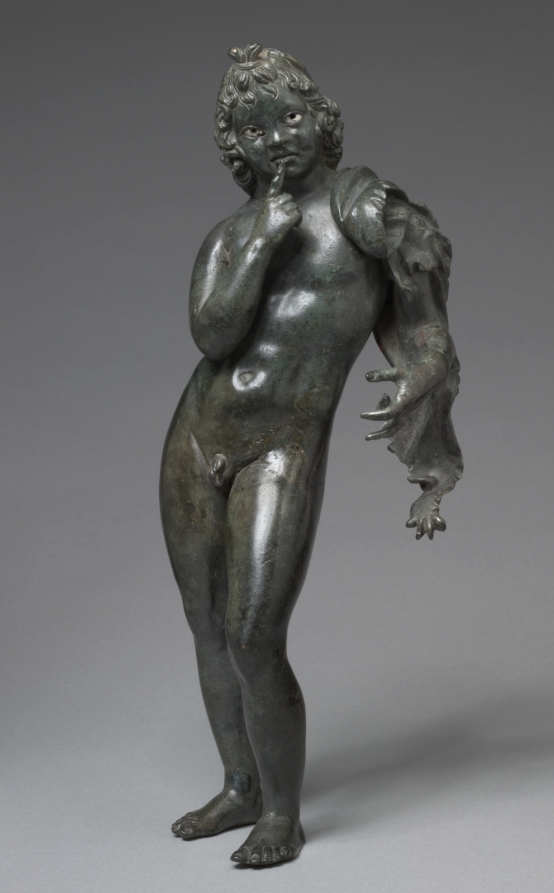
Statuette of Harpocrates, from The Cleveland Museum of Art
The Cleveland Museum of Art · Open Access · Reuse terms

Greece, Greco-Roman Period, late Ptolemaic Dynasty / c. 50 BCE

Statuette of Harpocrates

Statuette of Harpocrates

The Cleveland Museum of Art catalogs Statuette of Harpocrates as sculpture (Greece, Greco-Roman Period, late Ptolemaic Dynasty · c. 50 BCE).

The gesture this figure makes refers to the Egyptian hieroglyph for child, nn , 𓀁.

SERENDIPITYA little unexpected
FamiliarWeird

The museum identifies this sculpture as bronze, hollow cast, with silver inlays.

The museum's collection notes: Combining Hellenistic naturalism with a finger gesture associated with childhood in Egyptian tradition, this young figure represents Harpocrates, the Greek form of the Egyptian child sun god Horus, or Hor-pa-khred. A hole atop his head likely once held a double crown of Egypt, as on more traditionally Egyptian representations of Harpocrates.

The Cleveland Museum of ArtStatuette of Harpocrates

Original explanation based on the sources above. Images carry their own reuse terms.