Germany / c. 1630
Cupid (Amor)
Cupid (Amor)
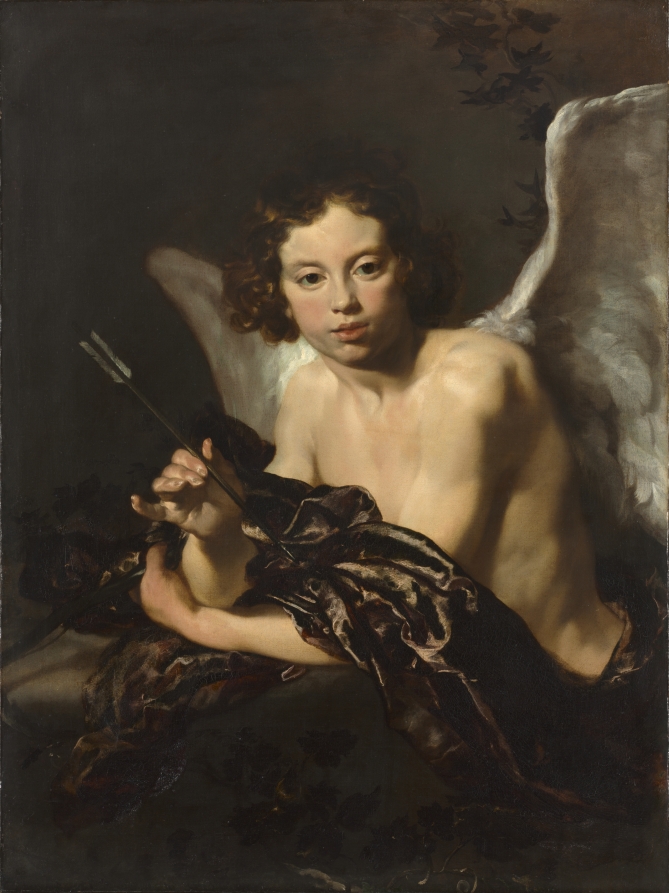
The Cleveland Museum of Art catalogs Cupid (Amor) as painting (Germany · c. 1630).
WHY IT’S INTERESTING
Liss skillfully combined Dutch, Flemish, and Italian styles to create his own distinct manner.
Germany / c. 1630
Cupid (Amor)
The Cleveland Museum of Art catalogs Cupid (Amor) as painting (Germany · c. 1630).
Liss skillfully combined Dutch, Flemish, and Italian styles to create his own distinct manner.
A CLOSER LOOK
The museum identifies this painting as oil on canvas and credits Johann Liss (German, c. 1597–1631).
The museum's collection notes: Johann Liss studied in Holland and Antwerp, and later (about 1620) traveled to Rome and Venice. His painting of Cupid—also known as Amor, the god of love—displays rich colors and fluid brushwork that were influenced by past Venetian masters (Titian, Tintoretto, or Veronese), while the deep contrasts of light and shadow reveal a stylistic debt to Caravaggio. The directness of Cupid’s gaze and the concentrated energy of his pose create a strong connection with the viewer.
FOLLOW THE EVIDENCE
The Cleveland Museum of ArtCupid (Amor)Original explanation based on the sources above. Images carry their own reuse terms.