YOUR NEXT DISCOVERY/ArtifactsFollow your curiosity
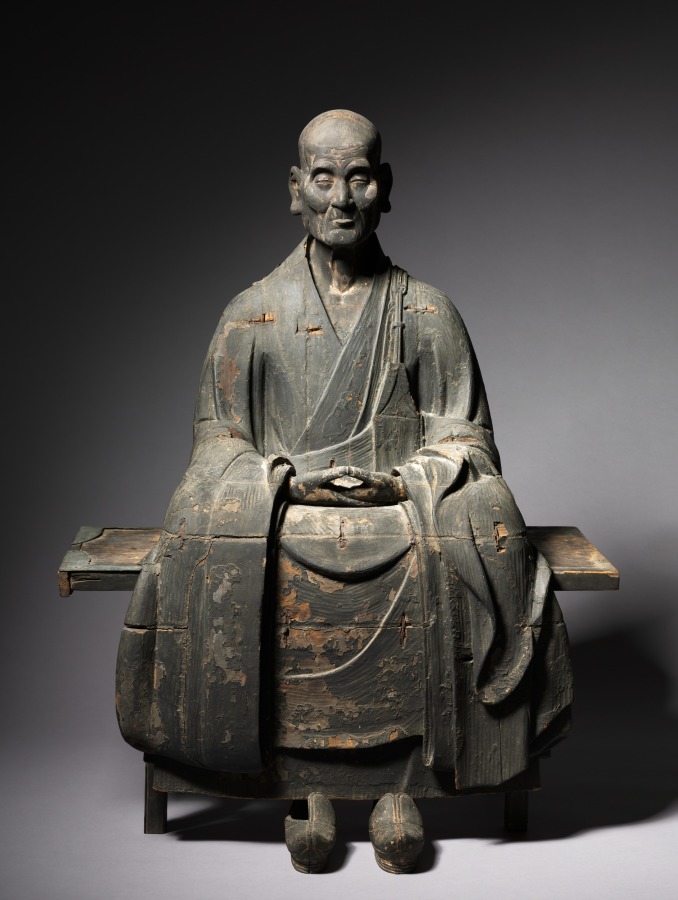
Portrait of Hottō Enmyō Kokushi, from The Cleveland Museum of Art
The Cleveland Museum of Art · Open Access · Reuse terms

Japan, Kamakura period (1185–1333) / c. 1295–1315

Portrait of Hottō Enmyō Kokushi

Portrait of Hottō Enmyō Kokushi

The Cleveland Museum of Art catalogs Portrait of Hottō Enmyō Kokushi as sculpture (Japan, Kamakura period (1185–1333) · c. 1295–1315).

Two famous sculptural portraits of this monk, one at the temple Ankokuji in Hiroshima, and another at the temple Kōkokuji in Wakayama, are dated to 1275 and 1286, respectively.

SERENDIPITYA little unexpected
FamiliarWeird

The museum identifies this sculpture as Hinoki cypress wood with lacquer, metal staples and fittings.

The museum's collection notes: Hottō Enmyō Kokushi, is a posthumous title bestowed upon the Zen Buddhist monk Shinchi Kakushin (1203–1298) by the emperor Go-Daigo. The title means “perfectly awakened national teacher of the Dharma lamp.” Considered a fine example of “Kamakura realism,” while downplaying detail in the body, the sculpture emphasizes fidelity in representing the visage of Kakushin.

The Cleveland Museum of ArtPortrait of Hottō Enmyō Kokushi

Original explanation based on the sources above. Images carry their own reuse terms.