A CLOSER LOOK
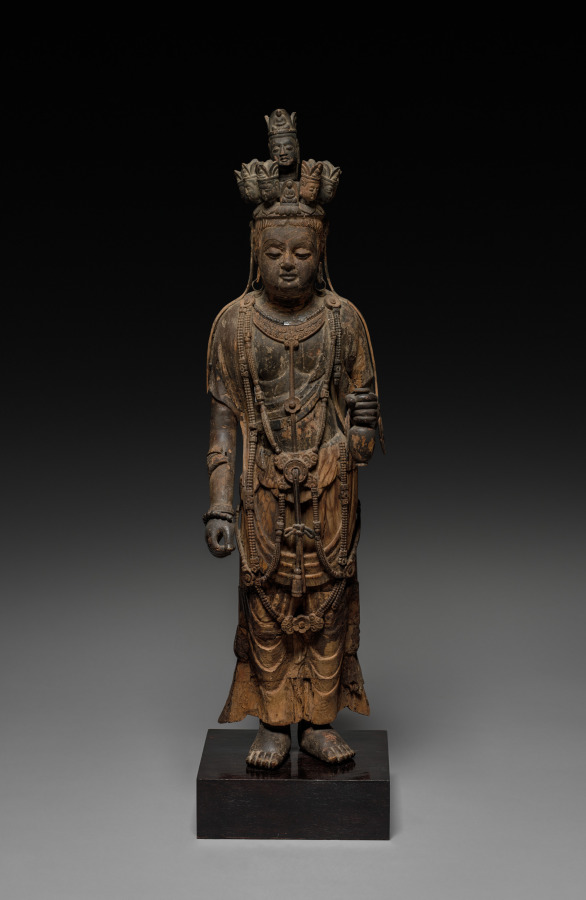
The museum identifies this sculpture as wood.
The museum's collection notes: Guanyin, the bodhisattva of infinite compassion, can be identified by his attributes, carrying a tiny Amida Buddha in his crown, and holding a bottle with the nectar of life in his left hand. The eleven-headed Guanyin, in particular, has his eyes and ears open in all directions to hear, see, and help all those who are in distress. The garment and jewelry of this graceful figure remind us that the historic Buddha Shakyamuni was originally an Indian prince before he reached enlightenment. Upon his death, he entered nirvana, an eternal state free of desire and suffering, outside the realm of birth, death, and rebirth. The dating and attribution