YOUR NEXT DISCOVERY/ArtifactsFollow your curiosity
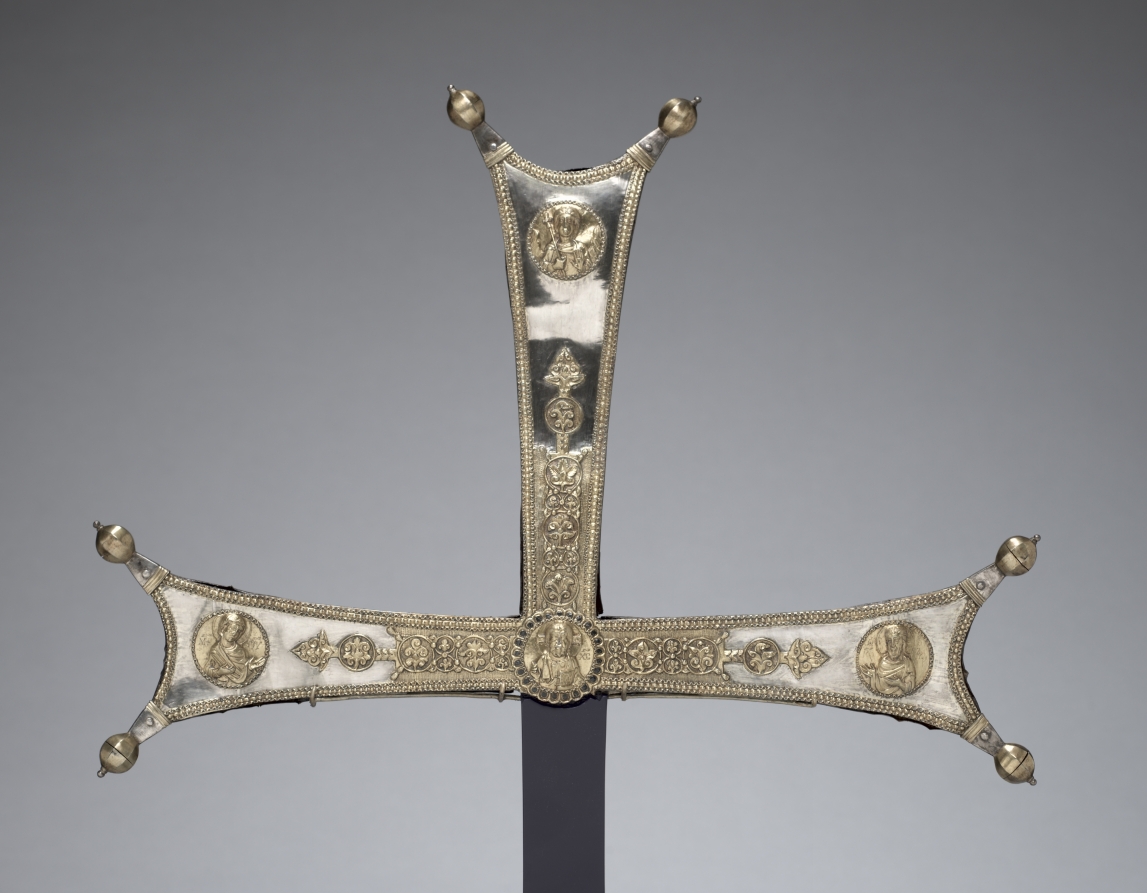
Fragment of a Processional Cross, from The Cleveland Museum of Art
The Cleveland Museum of Art · Open Access · Reuse terms

Byzantium, Constantinople, Byzantine period / c. 1050

Fragment of a Processional Cross

Fragment of a Processional Cross

The Cleveland Museum of Art catalogs Fragment of a Processional Cross as metalwork (Byzantium, Constantinople, Byzantine period · c. 1050).

Byzantine processions were a feast for the senses. Imagine the scent of sweet and spicy incense wafting through the air, mingling with the sound of sacred chants as priests carry this cross in a procession during the service.

SERENDIPITYA little unexpected
FamiliarWeird

The museum identifies this metalwork as silver gilt, niello.

The museum's collection notes: Impressively large and elaborately embellished, the cross to which this fragment belonged was likely carried in liturgical processions. The central medallion on its front depicts Christ, flanked by medallions showing the Virgin and Saint John the Baptist. Together they form the Deesis, a powerful Byzantine image formula evoking these saints’ intercession with Christ on behalf of mankind. In the central medallion on the cross’s back is Saint Sabas, founder of an important monastery near Jerusalem, in whose honor the cross was made. He is surrounded by other monastic saints, thus indicating that the cross was likely used by a monastic community

The Cleveland Museum of ArtFragment of a Processional Cross

Original explanation based on the sources above. Images carry their own reuse terms.