A CLOSER LOOK
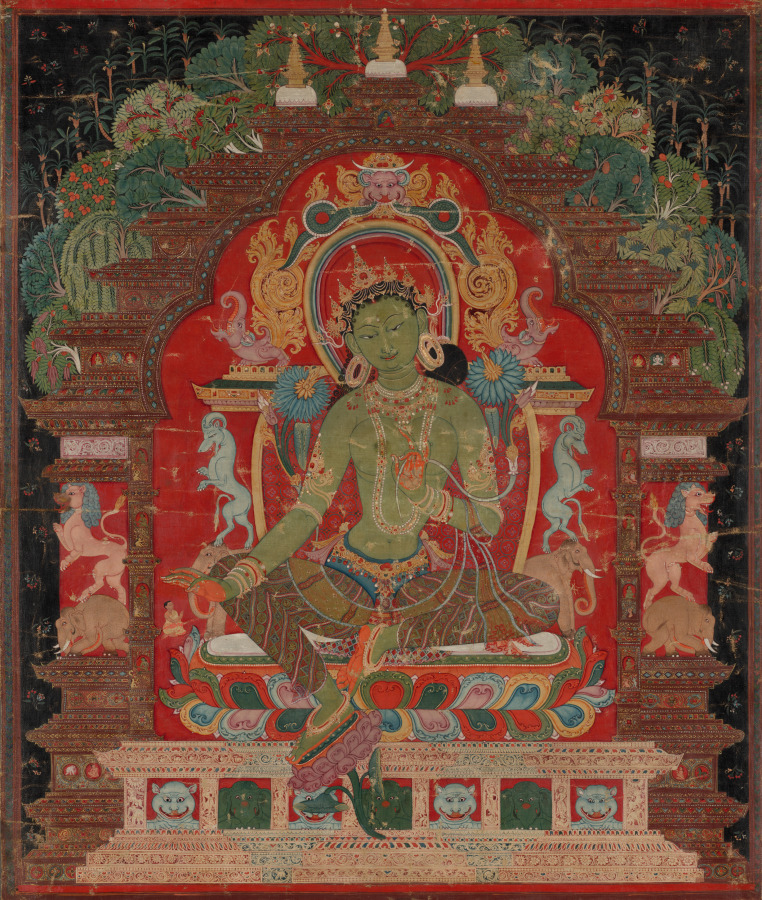
The museum identifies this painting as thangka; gum tempera, ink, and gold on sized cotton; mount: silk and credits Aniko (Nepalese, active in Tibet mid- to late 1200s).
The museum's collection notes: For Tibetans, Green Tara is one of the preeminent figures of their Buddhist faith, a radiant savioress who embodies the female form of the perfect, enlightened mind. The Green Tara in the Cleveland thangka— a Tibetan devotional painting on cloth—specifically dispels fear and provides protection, just like her mantra inscribed on the back side of the painting. Her green color and fear-not gesture link her to the cosmic Buddha of the North, enshrined above her head. Most scholars agree that this work was painted by the celebrated Nepalese artist known as Aniko.